“We are not just consuming energy; we are shaping culture.” This Gen-Z voice echoed through the “Youth Empowerment - Leading the Energy Future” Special Event on October 23, a flagship side event of the 2025 International Forum on Energy Transition held in Suzhou, east China's Jiangsu Province.
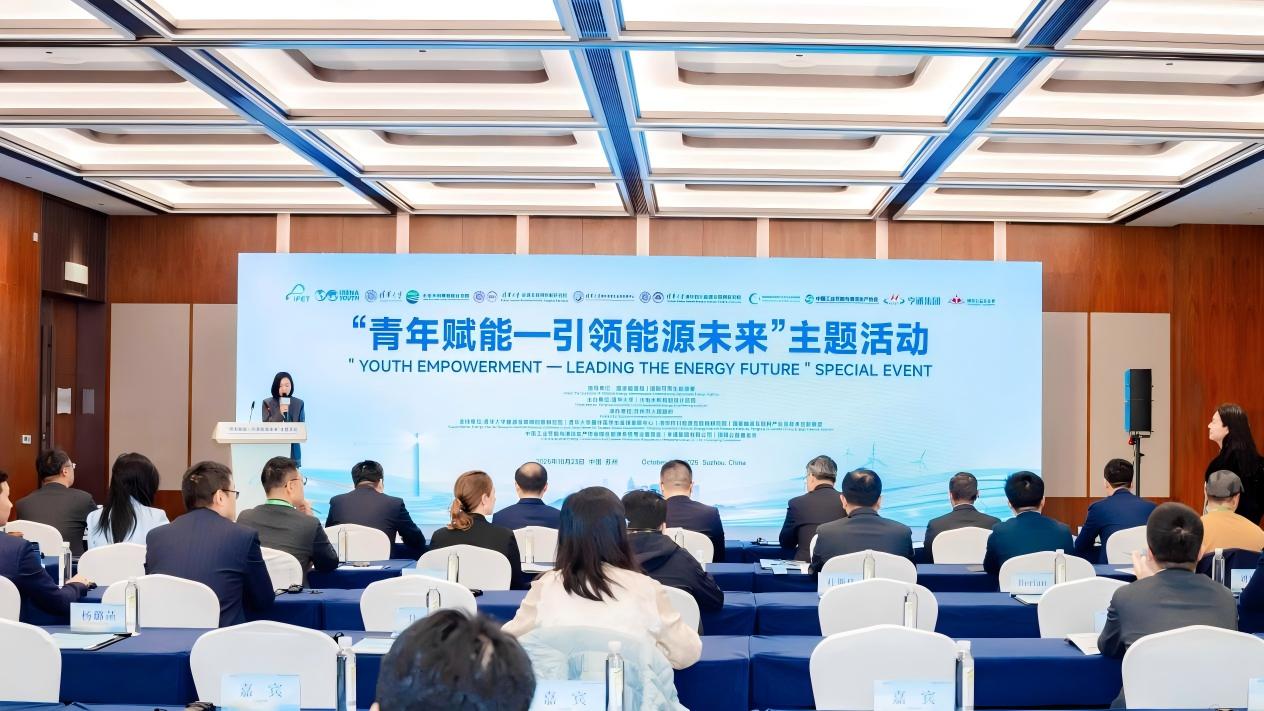
Hosted by China's Tsinghua University and the China Renewable Energy Engineering Institute (CREEI) under the guidance of the country's National Energy Administration (NEA) and with the support of the International Renewable Energy Agency (IRENA), the session brought together more than 100 young delegates, scientists and entrepreneurs from Asia, Europe, Africa, and the Americas to sketch a fast-track roadmap for global net-zero goals.
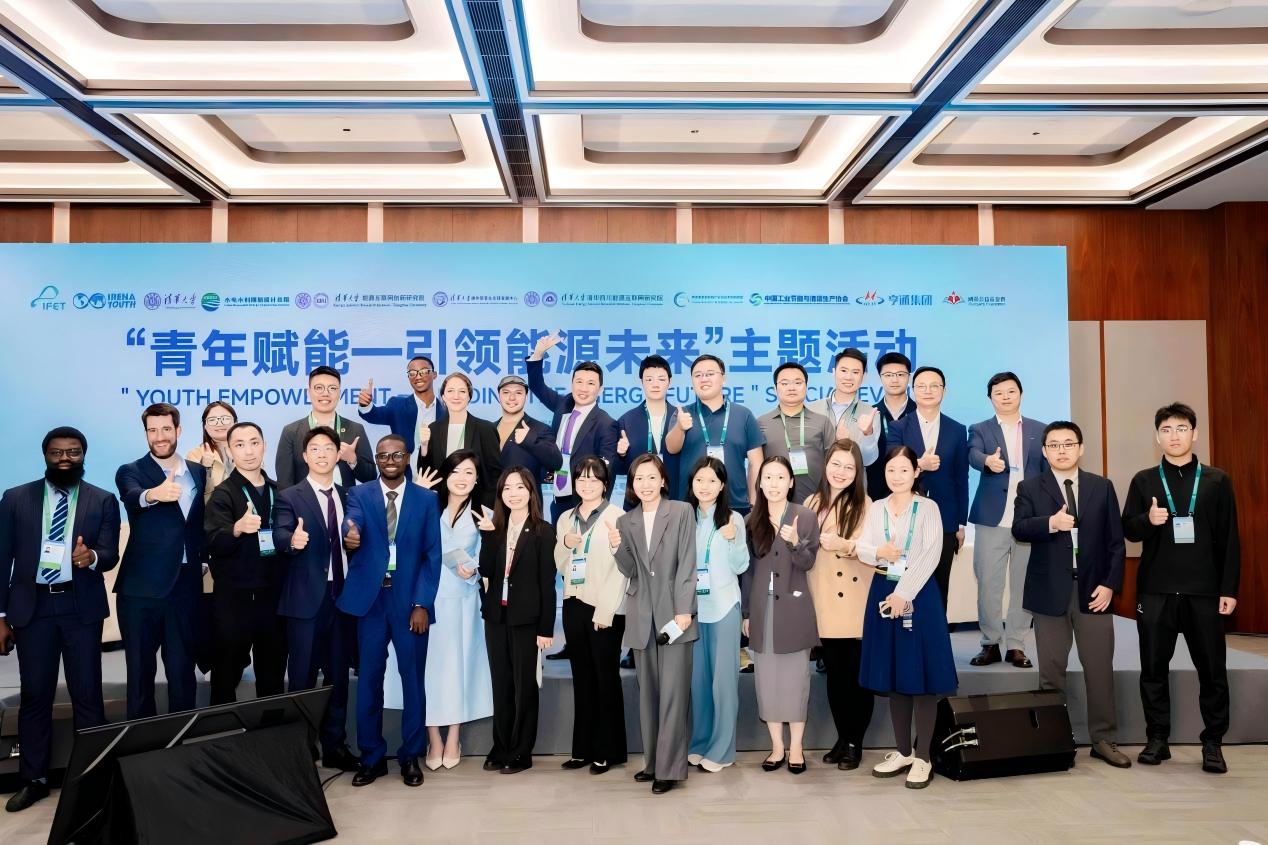
Prof. Kang Chongqing, dean of the Department of Electrical Engineering at Tsinghua and director of the university’s Energy Internet Research Institute, told the opening session that Tsinghua’s edge lies in a full-chain academic ecosystem that covers “generation, transmission, conversion, storage, management and end-use of energy,” adding that university programs such as the Global Alliance of Universities on Climate already serve as “borderless incubators for low-carbon leadership.”
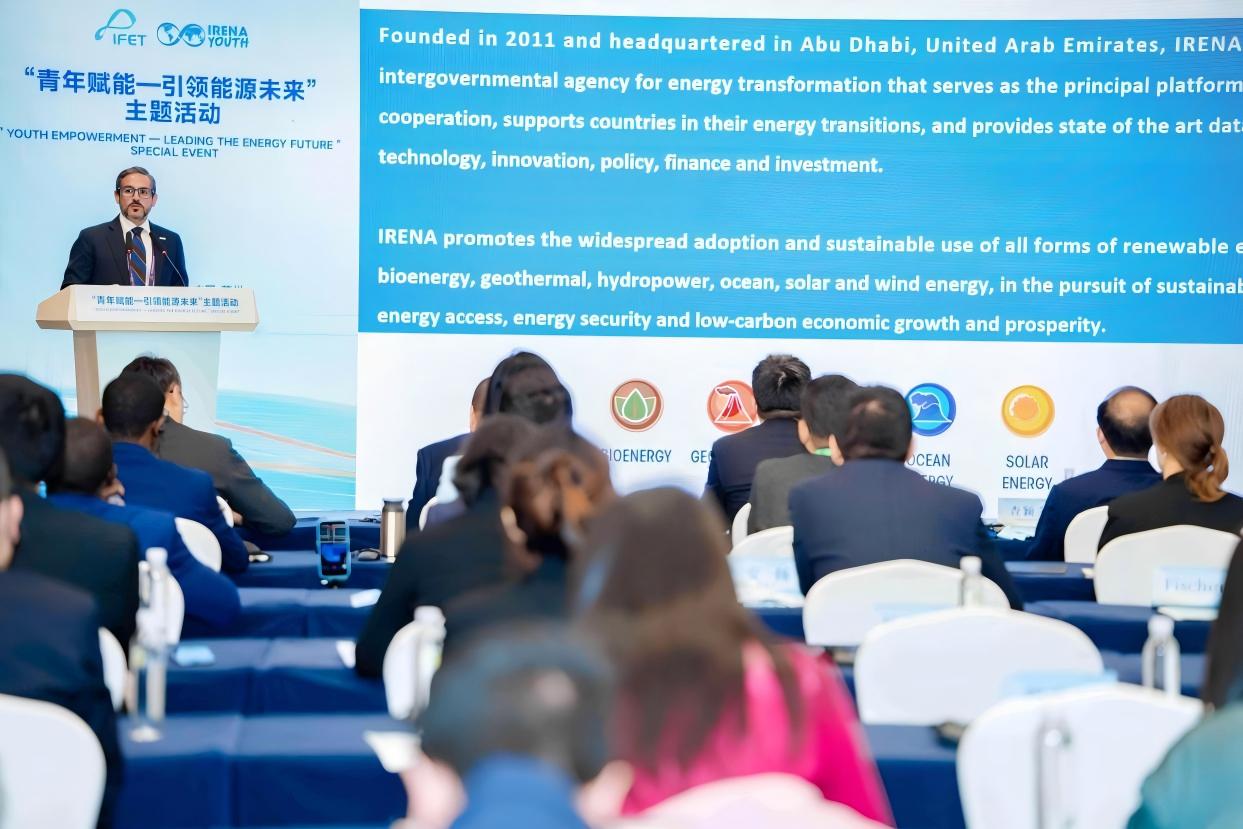
Riccardo Toxiri, senior adviser to the Director-General of IRENA, reminded participants that hitting renewable-energy targets will require “sub-regional and cross-regional cooperation centred on youth,” and unveiled a string of IRENA capacity-building platforms dedicated to young professionals.
In the “Youth Voices: Stories of Global Energy Transition” segment, six speakers offered frontline evidence of youth-led change.
Bianca Derya Neumann, co-chair of the UNECE Youth Group of Experts on Resource Management, gave a speech titled “From Mines to Minds: Fighting for a Just Energy Transition.”
Dr. Hui Hongxun, assistant professor at the University of Macau, explained how interdisciplinary synergy can deliver low-carbon cities.
Juan Sebastián Villegas Santos, data analytics and industry 4.0 specialist at Insightful Technologies, an information technology (IT) company in Singapore, showcased how data analytics drives energy innovation in Colombia.
Xu Qiang, general manager of the High Voltage Underground Cable and Submarine Cable System Department for International Market in China's Hengtong Group, described bio-inspired innovation as the global electrification mission of youth.
Qin Yudi, founder and CEO of LynkVertx Technology Co., Ltd., said vehicle-to-grid (V2G) pilots run by his firm already allow many electric cars to act as mobile storage.
Adigao Alvin Wenia, coordinator of The Climate Sociologist project, noted that “when we make solar cool, we turn energy policy into TikTok trends. And when we demand climate justice, we drive real change.”
Two parallel salons held during the event, chaired by Yu Zhou, head of Startup Ecosystem at New Energy Nexus China and Zheng Yuhan, Chair at the IEEE Young Professionals Climate and Sustainability Subcommittee, respectively, explored implementation challenges in energy transition.
The first salon, titled “Youth Entrepreneurs Empower Sustainable Cities of Tomorrow: Integrating Energy, Mobility, and Water for Resilient Urban Futures,” highlighted the need to integrate energy, mobility and water systems for sustainable urban development.
During the second salon, which was titled “Shaping the Future Energy Market: Youth Perspectives from Retrofitting Legacy Systems to Empowering New Technologies with Policy Support,” participants discussed topics such as retrofit finance, artificial intelligence (AI)-enabled grids, and transparent regulatory frameworks.
“Young officials and researchers are injecting innovation momentum into every segment of the energy chain,” said Du Sijia, junior programme officer at the Office for China-IRENA Cooperation.
International participants agreed that youth can both craft technology and business-model solutions and, through advocacy and outreach, foster the social momentum essential for a successful energy transition and green development.
The event was organized by the Suzhou Municipal People's Government and received support from multiple organizations, including the Energy Internet Research Institute of Tsinghua University, Tsinghua University Cyrus Tang Center for Student Global Development, Hengtong Group, Guoqiang Foundation, the Sichuan Energy Internet Research Institute of Tsinghua University, and China Industrial Energy Conservation and Cleaner Production Association.