The IEEE PES Day 2026 China Event was held at Tsinghua University on April 14, 2026. With the theme of "Innovating Today, Energizing Tomorrow", the event focused on AI-empowered new power systems and explored the deep integration and collaborative innovation between AI technologies and power energy systems.
Guided by the IEEE Power & Energy Society (PES), the event was co-hosted by the IEEE PES China Chapter Council (PCCC) and the Department of Electrical Engineering and Applied Electronics (EEA), Tsinghua University, and co-organized by the IEEE PES Beijing Chapter, Tsinghua University Student Chapter, Peking University Student Chapter, North China Electric Power University Student Chapter, and Beijing Jiaotong University Student Chapter.
Distinguished guests attending the event included: Jessica Bian (Bian Jianhua), Member of the US National Academy of Engineering and Former President of IEEE PES; Zhang Xiaofeng, Founder of the Global Green Energy Alliance, Vice Chair of the IEEE Smart Village Committee and Chair of the IEEE Smart Village China Committee; Chen Yonghui, Head of the Operations Group of the IEEE Smart Village China Committee; Olayinka Omowunmi, Head of the Project Development Group of the IEEE Smart Village Committee; Mao Yan, Executive Director of Shenzhen Mintai Electronics Co., Ltd.; Zhang Jun, Professor of Wuhan University and Chair of IEEE Wuhan Chapter; Wang Yi, Assistant Professor of the University of Hong Kong and Vice Chair of the IEEE Subcommittee on User Systems and Smart Buildings; Sun Mingyang, Researcher of Peking University and Faculty Advisor of the IEEE PES Peking University Student Chapter; Cao Shang, Level-3 Distinguished Expert of China Southern Power Grid Artificial Intelligence Technology Co., Ltd.; Kang Chongqing, Dean of EEA, Tsinghua University and Chair of IEEE PCCC; and Sun Kai, Deputy Dean of EEA.
The event was hosted by Zhong Haiwang, Associate Secretary-General of IEEE PCCC and Tenured Associate Professor of EEA, Tsinghua University.
The event consisted of two key sessions: the IEEE PES Day Keynote Speeches followed by a series of roundtable forums.
At the beginning of the event, Jessica Bian and Kang Chongqing delivered opening remarks respectively. As the Former President of IEEE PES, Jessica Bian shared her experience and insights from working at IEEE PES. She pointed out that participating in professional academic organizations is not only an important path for academic growth, but also a process of self-exploration and capacity building. She encouraged young students to actively participate in IEEE PES volunteer services and international academic exchanges, broaden their horizons, clarify their research directions, and find the intersection between personal development and the needs of the times in the process of global energy transition.
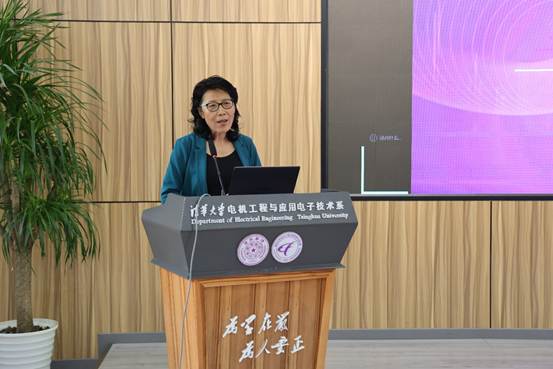
Jessica Bian Delivering an Opening Speech
Kang Chongqing delivered his opening speech. He noted that as one of the IEEE PES Day 2026 China series events, this activity aimed to explore the deep integration of artificial intelligence and the power energy field. Currently, computing-power and electricity coordination is emerging as a new trend in industry development, with computing power and electricity mutually reinforcing each other. It is essential to leverage artificial intelligence technologies to empower energy system development while providing reliable power support for data centers. He called on young scholars to actively engage in IEEE PES activities, integrate their personal careers with PES development, and contribute to the power energy industry in China and around the world.
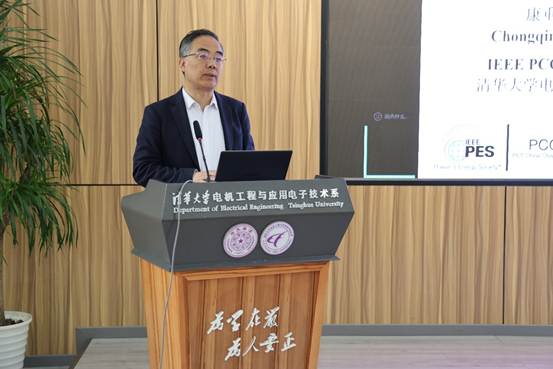
Kang Chongqing Delivering an Opening Speech
During the keynote speech session, three experts and scholars delivered fascinating academic presentations.
Jessica Bian gave a report titled "Challenges & Opportunities in Sustainable Energy". Starting from the power business model of Thomas Edison's era, she analyzed the challenges and opportunities facing energy transition in North America. She pointed out that the explosive growth of AI data centers is reshaping the pattern of power demand, and energy storage technologies, advanced transmission technologies, and demand response will be the keys to addressing this challenge. She called for accelerating the transition to sustainable energy through market mechanisms and technological innovation.
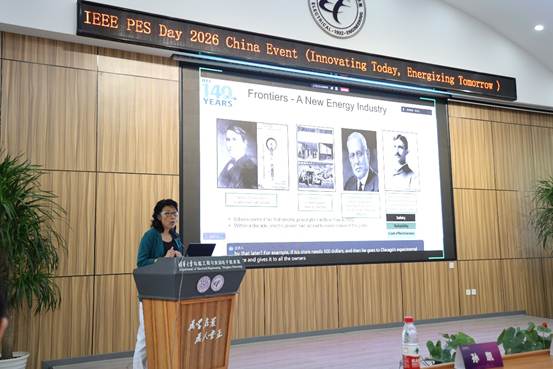
Jessica Bian Delivering a Keynote Speech
Zhang Jun delivered a report titled "Cutting-edge Technologies of Generative AI and Their Digital-Intelligent Applications in Power Systems". He systematically sorted out the technological evolution path of large AI models from the first to the fourth generation, analyzing the technological transformation trends from ChatGPT to GPT-6. He focused on introducing the critical role of "Harness Engineering" in industrial-grade AI applications, shared his team's engineering practices in scenarios such as intelligent equipment condition diagnosis and automatic substation ticket generation, and demonstrated how AI technology can compress work that traditionally takes days into just over ten minutes with remarkable efficiency.
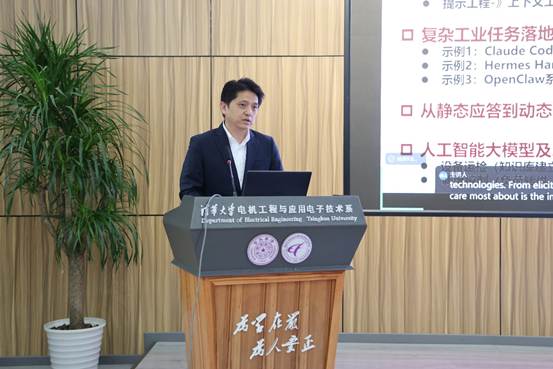
Zhang Jun Delivering a Keynote Speech
Wang Yi delivered a report titled "Agentic AI Empowering New Power Systems: A New Paradigm for Prediction and Decision-Making Based on Human-Computer Interaction". Addressing the dynamic challenges in power system prediction and decision-making, he proposed a new AI paradigm based on human-computer interaction. Through cases such as interactive load forecasting and rule-driven power market bidding strategy generation, he demonstrated how to use large language models to bridge natural language, mathematical language, and code language, achieve in-depth collaboration between business personnel and AI systems, and improve prediction accuracy and decision reliability.
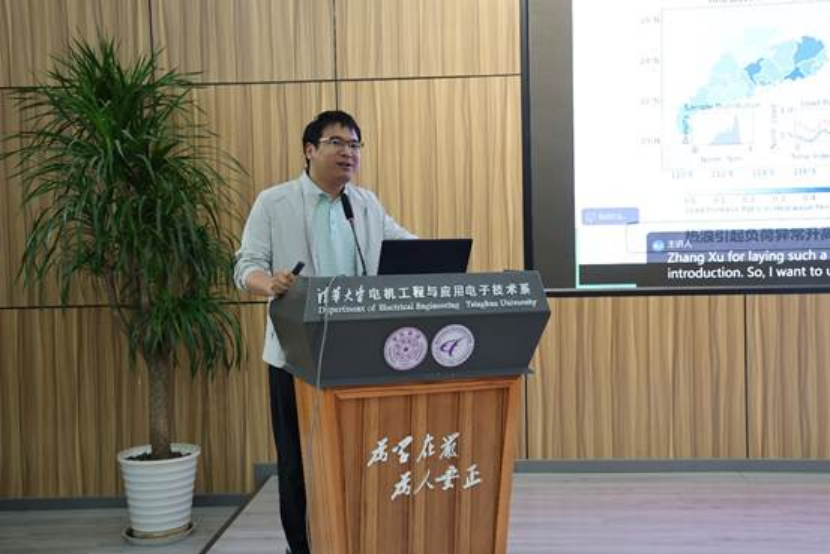
Wang Yi Delivering a Keynote Speech
The roundtable forum session, hosted by Zhong Haiwang, featured in-depth discussions on the theme of "AI-Empowered New Power Systems". Guests including Jessica Bian, Zhang Xiaofeng, Zhang Jun, Wang Yi, Sun Mingyang, and Cao Shang participated in the discussions, sharing their perspectives on the application prospects and challenges of artificial intelligence technologies in the energy and power sector from various angles.
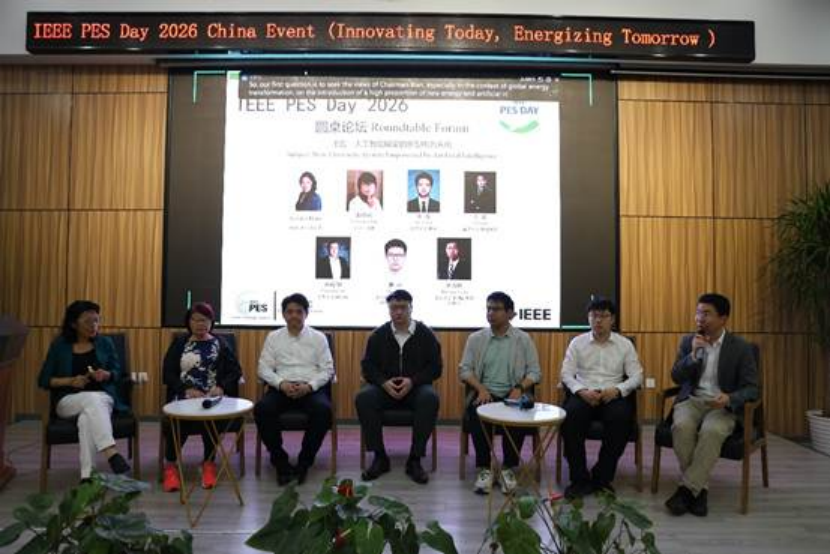
Scene of the Roundtable Forum
The event venue was filled with a lively atmosphere. Faculty and students from Tsinghua University, Peking University, North China Electric Power University, Beijing Jiaotong University, and other universities actively asked questions and engaged in in-depth exchanges with experts on cutting-edge issues such as AI interpretability, few-shot learning, and human-machine collaboration mechanisms. This event not only enabled students to learn cutting-edge knowledge about the integration of artificial intelligence and new power systems, but also helped them understand the latest industry developments and technological trends through the keynote speeches and roundtable forums, leaving them with a wealth of valuable insights.
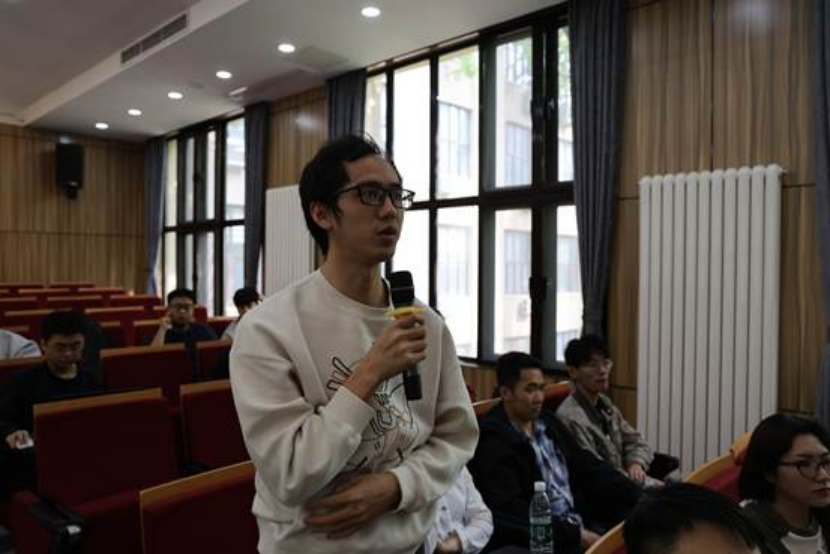
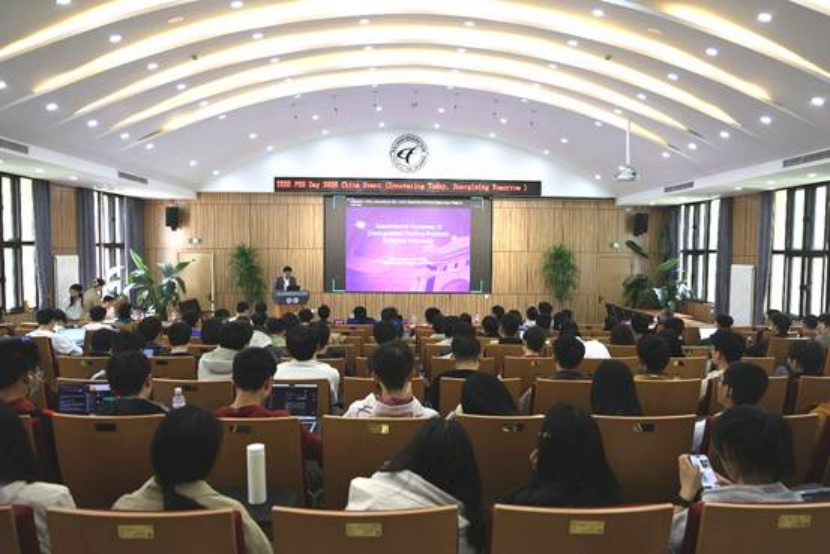
Scene of the Event
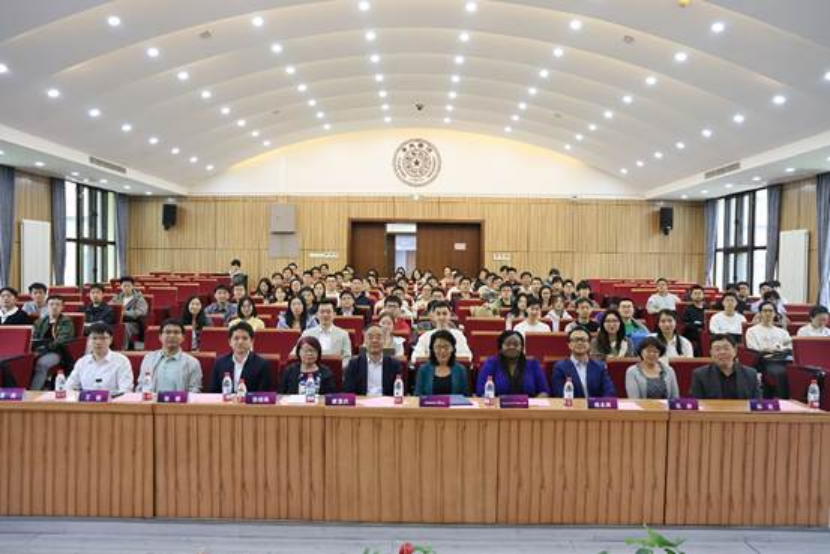
Group Photo of the Event
With this, the event concluded successfully. The IEEE PES Day China Event will continue to serve as an important bridge connecting academia and industry, China and the world, contributing Chinese wisdom to promoting global energy transition and sustainable development.