On July 22, on the sidelines of the IEEE Power and Energy Society (PES) 2026 Annual General Meeting, the symposium themed Energy and Power Education, Teaching, and Career Development in the AI Era was successfully held in Montreal, Canada. Supported by the Department of Electrical Engineering (DEE) at Tsinghua University and organized by the North-American Tsinghua DEE Alumni Association, the event ran alongside a reunion of North American Tsinghua DEE alumni and friends. DEE alumni, energy and power experts, scholars and industry practitioners from all over the world gathered to conduct in-depth discussions on energy & power education, research innovation and career development amid the AI era.
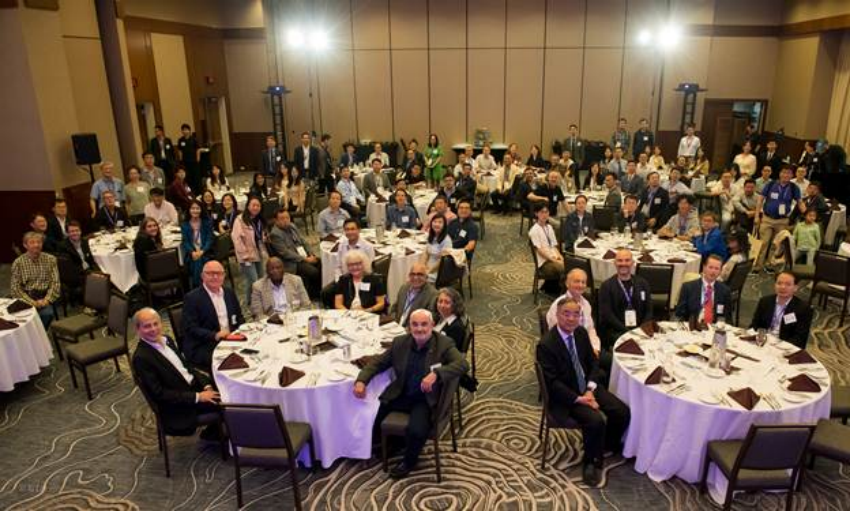
Group Photo of Symposium Participants
Apart from assembling Tsinghua DEE alumni globally, the symposium invited a roster of distinguished international guests: former IEEE President Professor Saifur Rahman; former IEEE PES President Jessica J. Bian; PES President-elect Professor Bikash Pal; Members of the U.S. National Academy of Engineering (NAE) Anjan Bose, Kaushik Rajashekara, Kevin Tomsovic, Yilu Liu and Joe H. Chow; Fellows of the Canadian Academy of Engineering Claudio Cañizares and Innocent Kamwa; Fellows of the Royal Academy of Engineering (UK) Jovica Milanovic and Tim Green; Tsinghua Distinguished Visiting Professors Nikolaos Chatziargyriou, Vladimir Terzija and Lang Tong; as well as editorial board members of iEnergy , CSEE-JPES and MPCE , including Kai Strunz, Pierluigi Mancarella, Xiaoping Zhang, Lei Wu, Jianguo Zhu, Jianhui Wang and Xiaonan Lu.
Domestic Chinese power-sector experts were also in attendance, namely Professor Fu Yang, Vice President of Shanghai University of Electric Power; Professor Huang Ying, Associate Dean of the College of Electrical Engineering, Zhejiang University; Professor Gu Wei, Party Secretary of the School of Electrical Engineering, Southeast University; Professor Dong Xuzhu from Wuhan University; Professor Zhu Jizhong from South China University of Technology; and Professor Luan Wenpeng from Tianjin University.
Participants came from the United States, Canada, the United Kingdom, Germany, Switzerland, Finland, the Republic of Korea, Japan and Hong Kong, China. Represented institutions covered top universities including Harvard University, Princeton University, Cornell University, Columbia University, Purdue University, Washington State University, the University of Texas, the University of California, Los Angeles, the University of California, Riverside, the University of Oxford, the University of Cambridge, Imperial College London, Newcastle University, the University of Waterloo, Université Laval, the University of Melbourne, Yonsei University, Korea University, the Chinese University of Hong Kong and Hong Kong Polytechnic University. Attendees also represented power market operators PJM Interconnection, California ISO, ISO-New England and ERCOT, plus enterprises such as Powertech Labs, RTDS, Google, Siemens and Mitsubishi.
Tsinghua’s delegation was led by Professor Kang Chongqing, Head of DEE, accompanied by DEE faculty Wu Wenchuan, Ci Song, Zhong Haiwang, Guo Hongye and Lin Chenhui, and Professor Geng Hua from the Department of Automation. A number of young alumni, postdoctoral researchers and doctoral students also took part. The onsite session was co-chaired by Lv Ruike, a 2026 DEE doctoral alumna, and Chen Jiaqi, a 2020 DEE master’s alumnus. Real-time AI-generated Chinese-English subtitles ran throughout the whole event, with a large screen synchronously displaying all spoken content to facilitate communication among international guests.
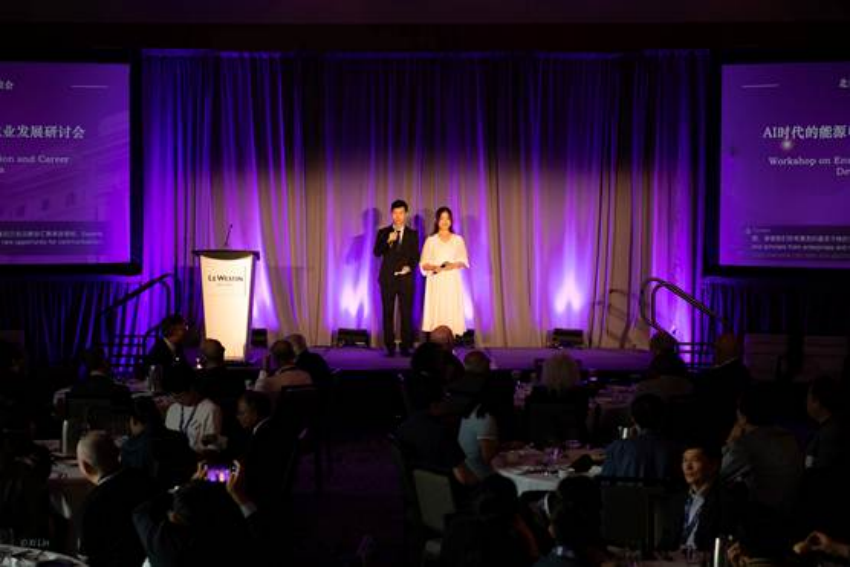
Lv Ruike (Left) and Chen Jiaqi Co-chairing the Symposium
Professor Kang Chongqing delivered opening remarks and extended a warm welcome to all guests, alumni and industry attendees. He noted that the alumni gathering had been upgraded into a professional symposium open to international peers, with the goal of broadening exchange boundaries and deepening discussion content. When talking about educational reform in the AI era, he emphasized that all AI applications must be rooted in fundamental electrical engineering theories and tested against physical laws, engineering constraints and safety standards. Talent training should not merely focus on AI operation skills, but also on identifying real-world research problems, verifying experimental results and solving practical engineering challenges. He also shared DEE’s practices in AI-assisted teaching and the construction of a disciplinary knowledge engine.
Saifur Rahman, Jessica J. Bian and Bikash Pal delivered speeches in sequence, offering sincere well-wishes for the symposium and sharing insights from the standpoints of international academic organizations and global power industry development.
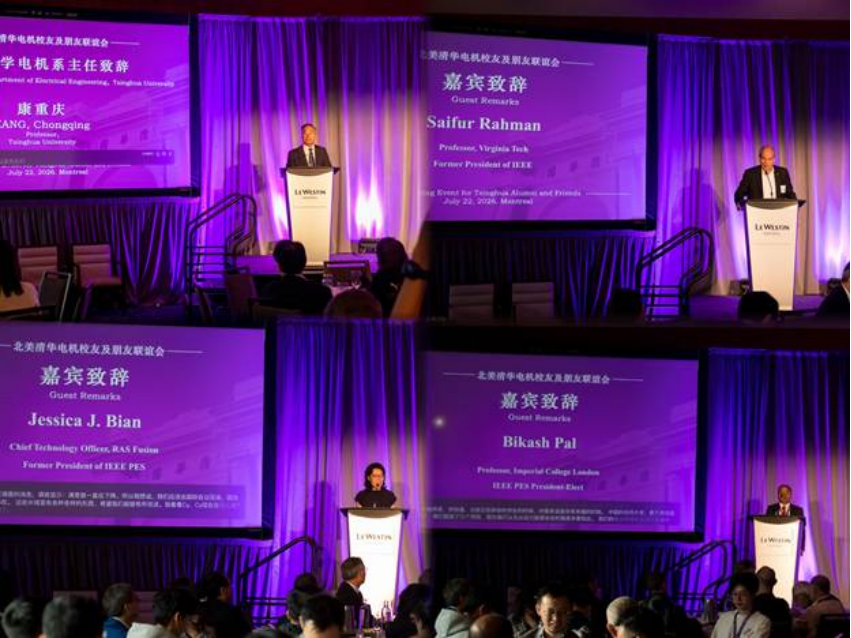
Remarks by Kang Chongqing, Saifur Rahman, Jessica J. Bian and Bikash Pal
During the interactive session, participants spent ten minutes introducing themselves at each table, sharing their research directions and institutional affiliations. Every table then selected one representative to deliver a two-minute introduction of all table members to the full audience. These concise, lively introductions quickly narrowed the distance between attendees and laid the groundwork for follow-up in-depth exchange and collaboration.
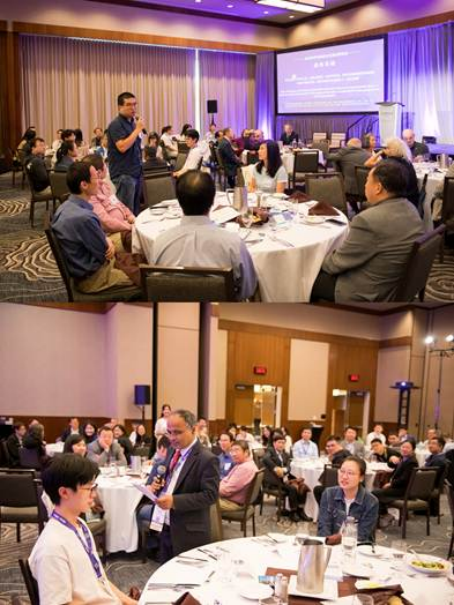
Table Introductions and Representative Presentations
In the keynote segment, Professor Anjan Bose (Washington State University), Professor Claudio Cañizares (University of Waterloo), Professor Vladimir Terzija (Newcastle University) and Professor Pierluigi Mancarella (University of Melbourne) shared their observations on energy & power education, scientific research and career development in the AI age.
Professor Anjan Bose stated that artificial intelligence was triggering profound transformations within engineering education, postgraduate training and research methodologies. For future talent cultivation, greater weight should be placed on real-world engineering problems, problem-formulation capabilities and hands-on engineering practice. He called on the academic community to reassess the publication-oriented training model adopted by many programs, and to reflect on AI’s long-term impacts on power system research paradigms and engineering job roles.
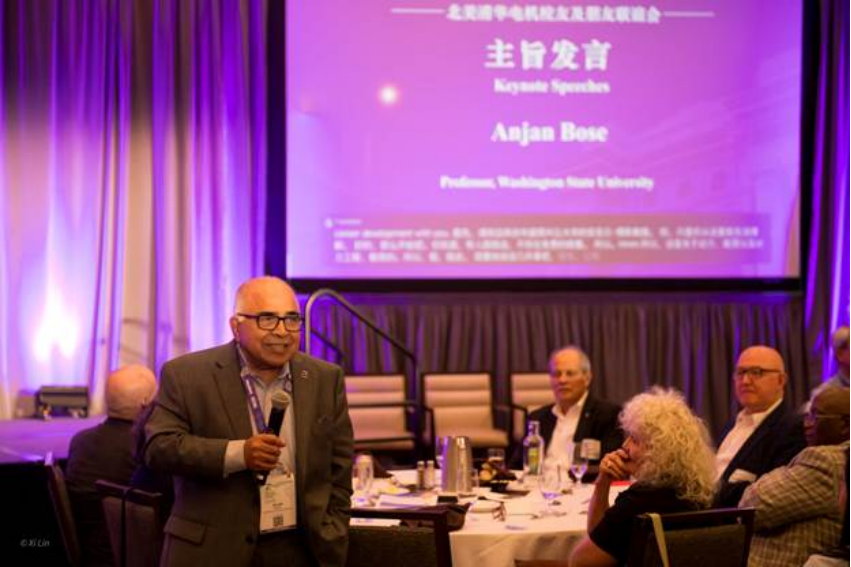
Professor Anjan Bose Delivering the Keynote Speech
Starting from real-world AI deployments in power grids, Professor Claudio Cañizares stressed that insufficient high-quality datasets, scarce extreme fault samples and unbalanced data distributions constituted core bottlenecks for model training and field implementation. He proposed integrating data generation, continuous learning and manual monitoring with human professional expertise, and pushing forward sustainable energy system development via interdisciplinary teams.
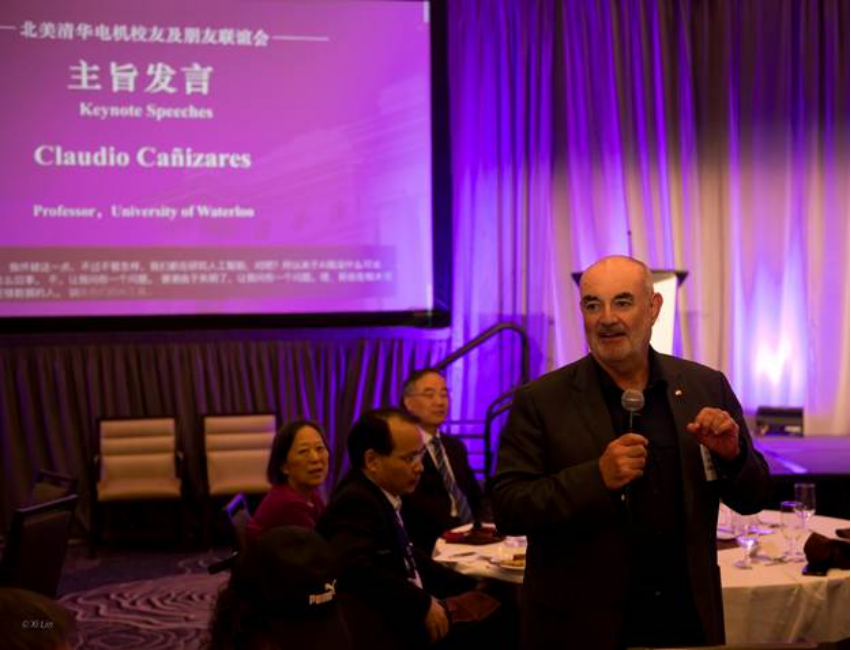
Professor Claudio Cañizares Delivering the Keynote Speech
Professor Vladimir Terzija reviewed the technical evolution from early expert systems and MATLAB platforms to modern AI tools. He pointed out that while AI could accelerate learning and research workflows, the comprehension and digestion of knowledge still required sufficient time. Education ought to prioritize thorough mastery of basic principles and specialized expertise while boosting work efficiency.
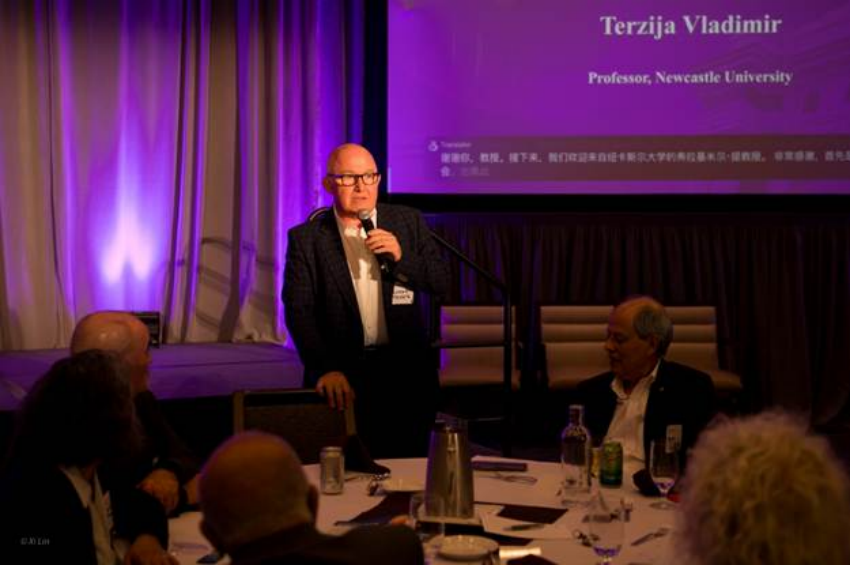
Professor Vladimir Terzija Delivering the Keynote Speech
Drawing on decades of cross-border academic exchange experience, Professor Pierluigi Mancarella recalled pleasant collaborative memories with Tsinghua scholars and DEE researchers. He looked forward to further deepening cross-regional and inter-institutional communication through platforms such as IEEE PES, to jointly advance power-energy education and industrial progress.
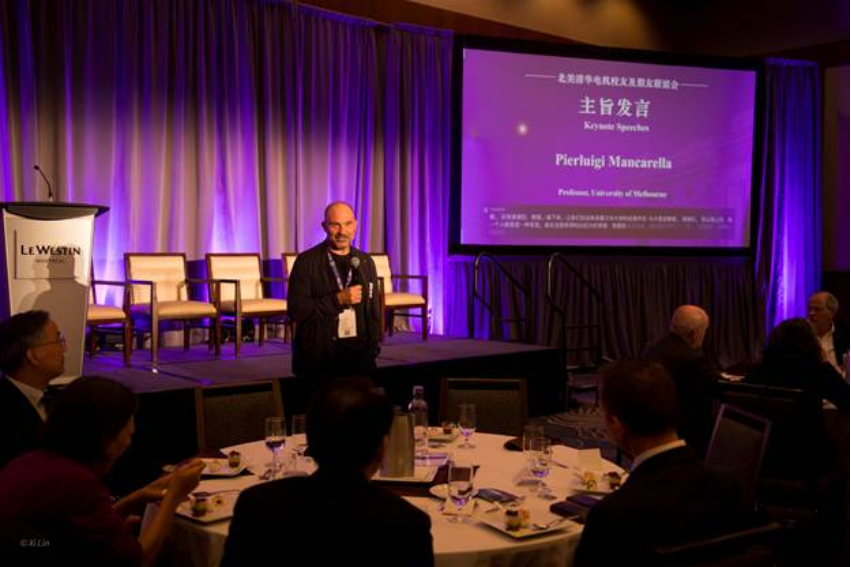
Professor Pierluigi Mancarella Delivering the Keynote Speech
Professor Yu Nanpeng from the University of California, Riverside, moderated the panel discussion. Panelists included Dr. Chen Hong (PJM Interconnection), Professor Lang Tong (Cornell University), Dr. Lin Xi (Powertech Labs) and Dr. Zhang Song (ISO-New England). The five experts discussed AI’s influences on power practitioners’ competency frameworks, research methodologies and career paths from both academic and industrial perspectives.
The panel reached a consensus that AI’s value extended far beyond automating repetitive work and lifting operational efficiency — it also helped industry practitioners identify and define practically valuable research problems. For university students and early-career professionals, they suggested proficient use of AI tools alongside solid mastery of power-energy domain knowledge, cultivation of interdisciplinary capabilities in data engineering and cloud infrastructure, cross-disciplinary communication awareness, and consistent independent judgment and lifelong learning habits.
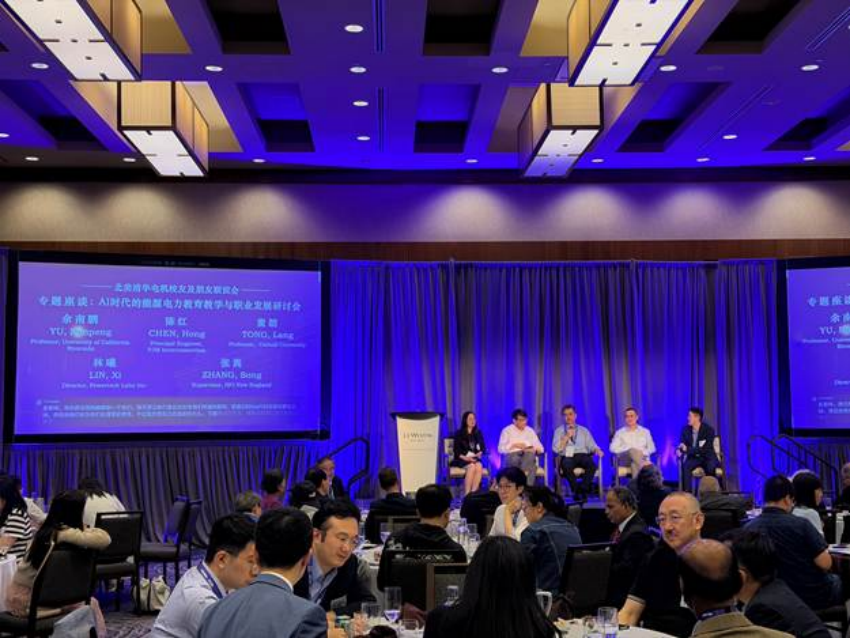
Panel Discussion on "Energy and Power Education, Teaching, and Career Development in the AI Era"
After the formal agenda concluded, free networking and academic conversations continued. Participants held extensive exchanges covering research collaboration, career growth and industry frontiers. All attendees regarded this gathering as a new starting point for joint exploration amid deep integration of AI and energy systems, and agreed to reconvene the symposium the following year.