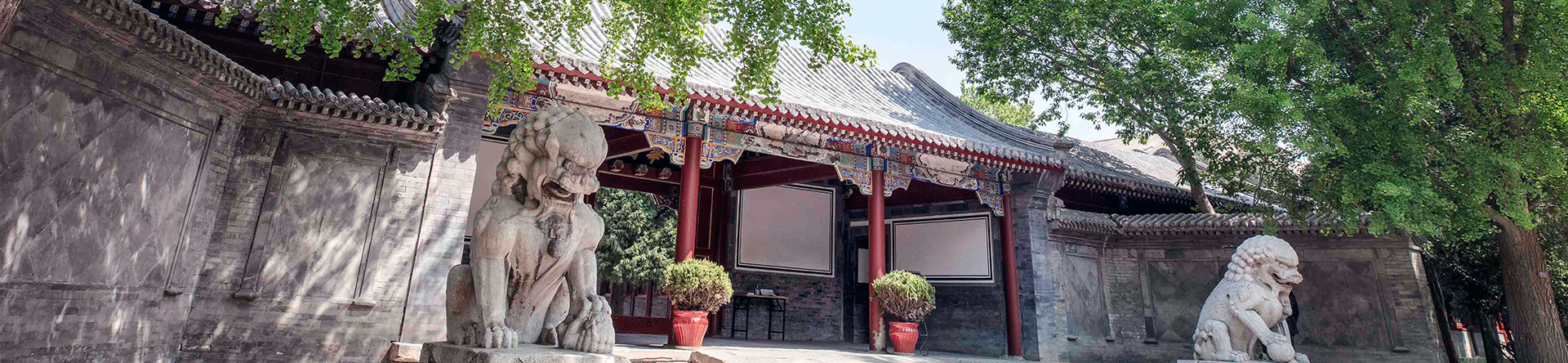
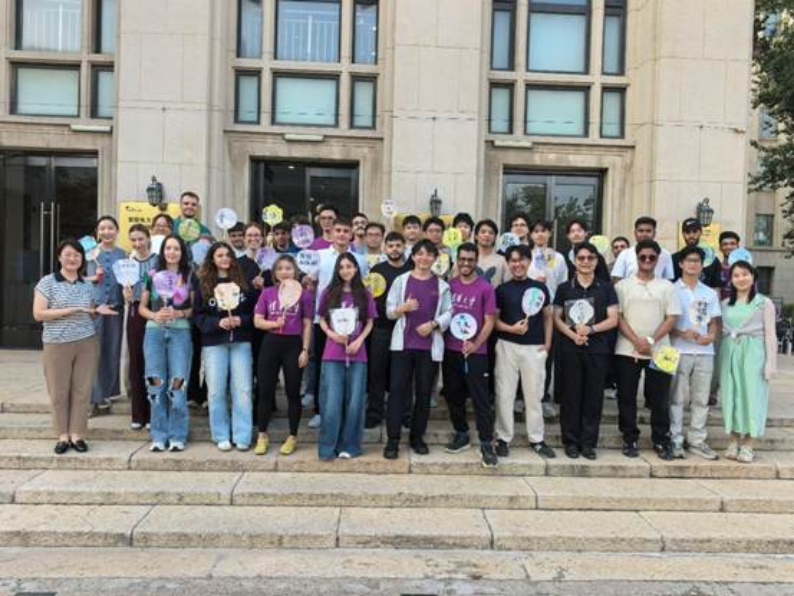
In August 2026, the Asian Universities Alliance (AUA) International Summer School on Future Power and Energy Systems (FPES), hosted by the Department of Electrical Engineering (DEE) of Tsinghua University, was successfully held. The event brought together 35 young scholars from 25 universities across 21 countries. Through systematic frontier academic courses, industrial field visits and diverse cultural experience activities, it built a high-level learning and exchange platform for young talents in the global energy field.
Special Lectures: From Power Systems to the Frontiers of Energy Transition
The summer school offered 9 specialized courses on future power and energy systems. Domestic and international experts and scholars, including Bikash C. Pal, Foreign Member of the Chinese Academy of Engineering, Distinguished Visiting Professor of Tsinghua University and Professor of Imperial College London, and José Rodríguez, Member of the Chilean Academy of Engineering and Distinguished Visiting Professor of Tsinghua University, delivered special lectures on topics such as energy storage and new-type power systems, energy demand and flexibility of data centers, wireless power transmission, AC/DC transmission, photovoltaic power generation, magnetic materials and sensing, power system fault analysis, power electronics and energy transition, and power electronics technology for renewable energy. The courses balanced fundamental theory, frontier technology and engineering applications, providing participants with diverse perspectives on the key issues of the development of future power and energy systems in the context of global energy transition.
The courses covered both classic professional content such as power systems and power electronics, and rapidly developing new issues such as data centers, new energy storage and photovoltaic power generation. Ample discussion and Q&A sessions were arranged during the lectures, and participants exchanged views with the instructors based on their own professional backgrounds, discussing different technology routes and their engineering applications.
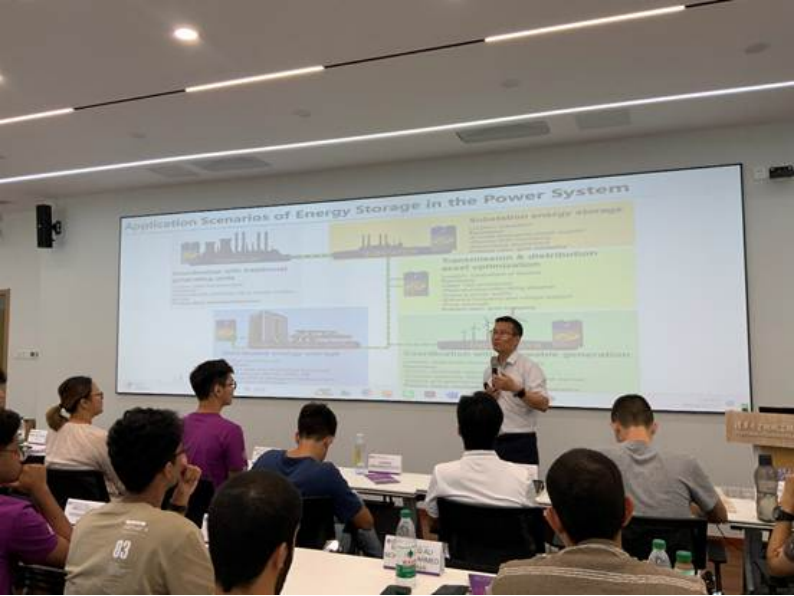
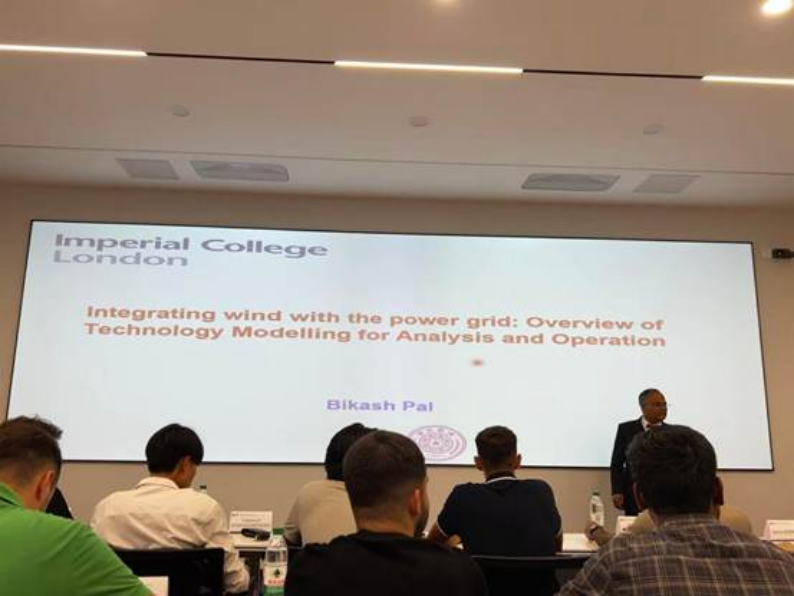
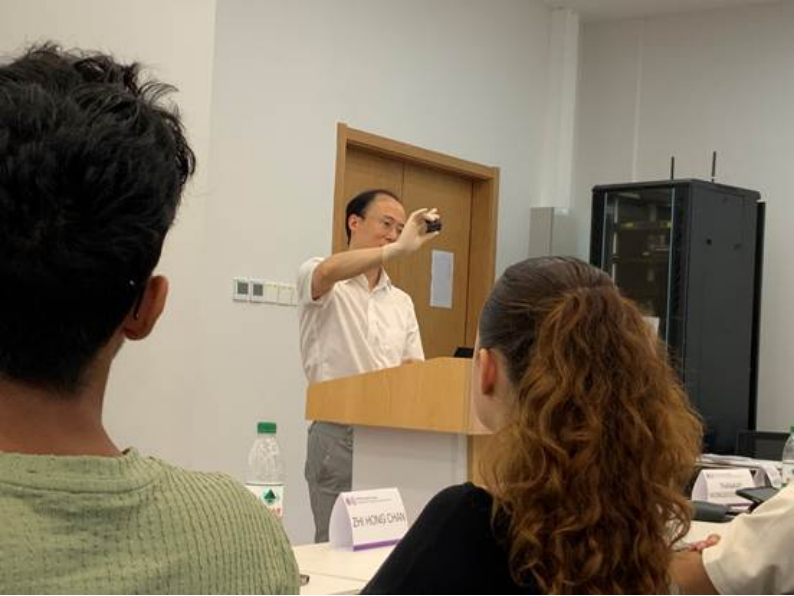
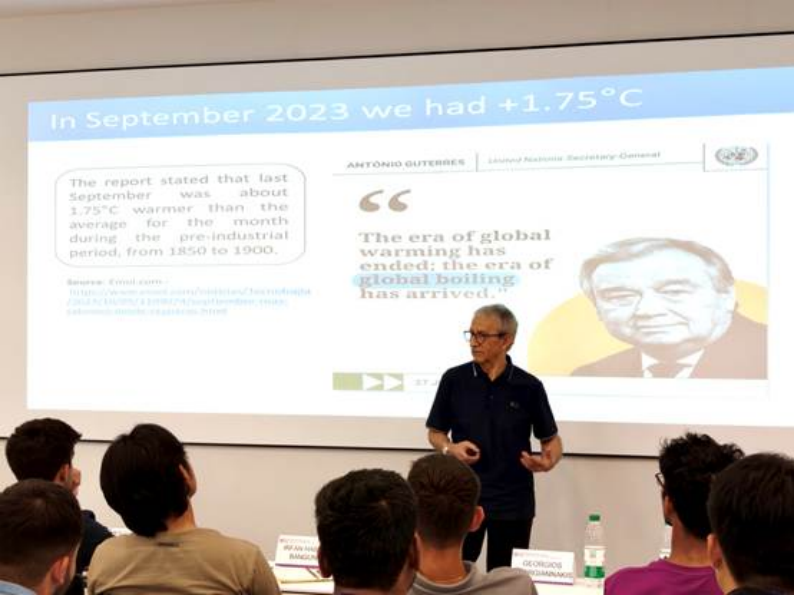
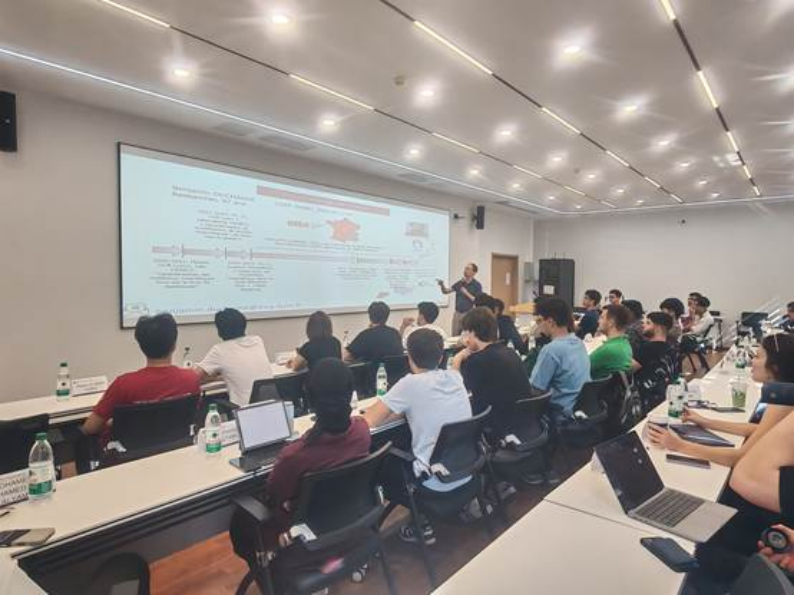
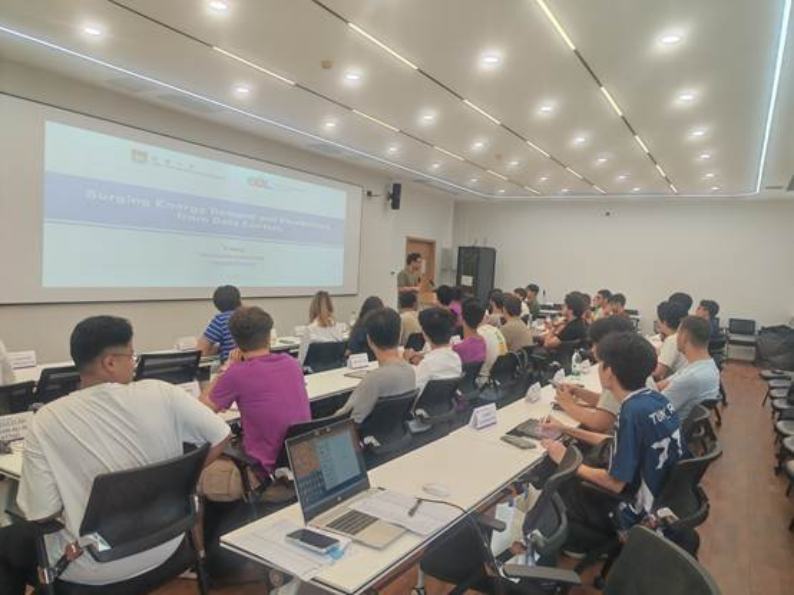
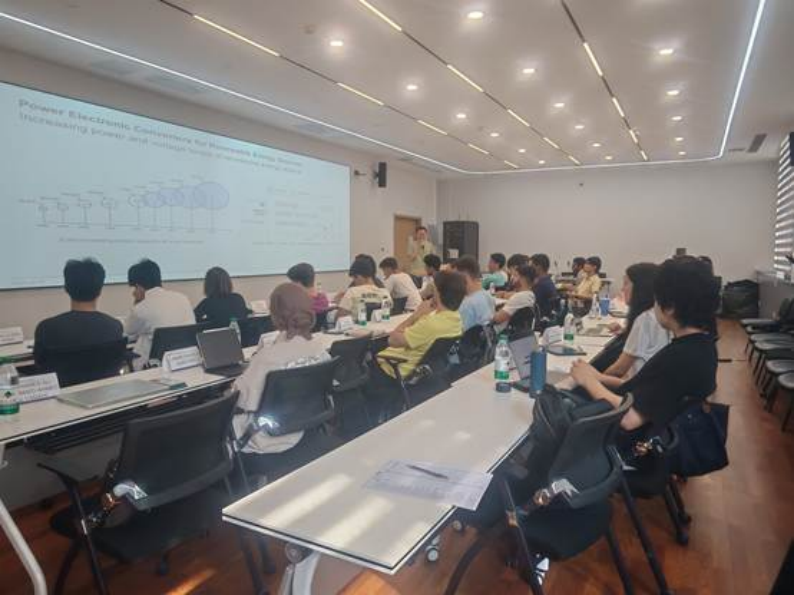
Lecture Sessions of the Special Lectures
Besides classroom learning, participants also conducted literature research and group collaboration on the power systems of their own countries or regions, and completed topical presentations before the conclusion of the program. The differences among countries in resource endowments, geographical conditions and levels of renewable energy development further extended the classroom content into how to respond to the differentiated challenges of power and energy transition around the world.
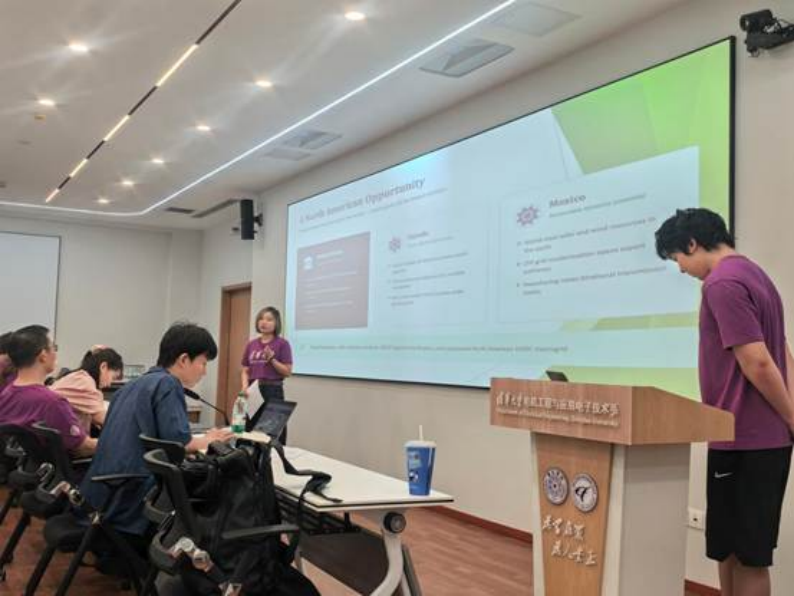
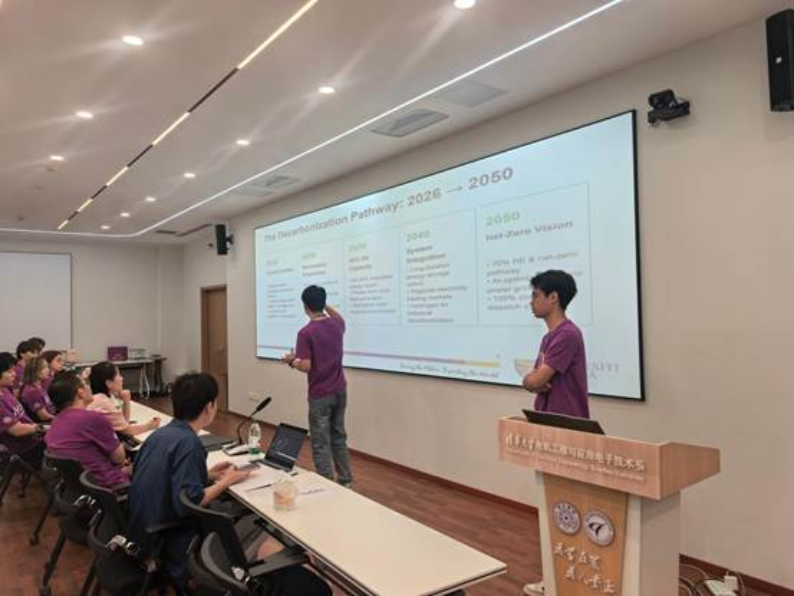
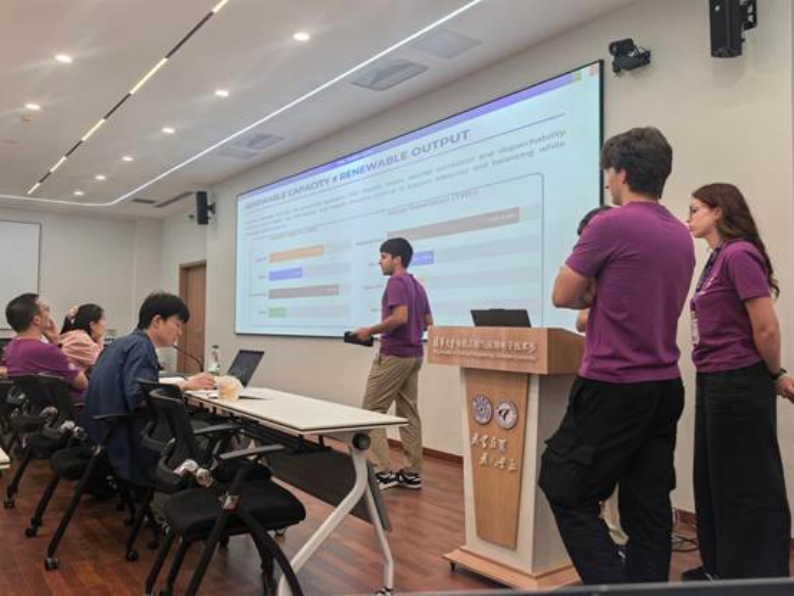
Group Presentations by Participants
Practical Visits: From Laboratories to Real Energy Systems
To help participants understand the practical application of classroom knowledge in research and industry, the summer school arranged multiple technical visits. At Tsinghua University, participants visited the State Key Laboratory of New Power System Operation and Control, learned about the relevant research platforms and experimental facilities, and observed at close range the process of power and energy technologies advancing from basic research to experimental verification.
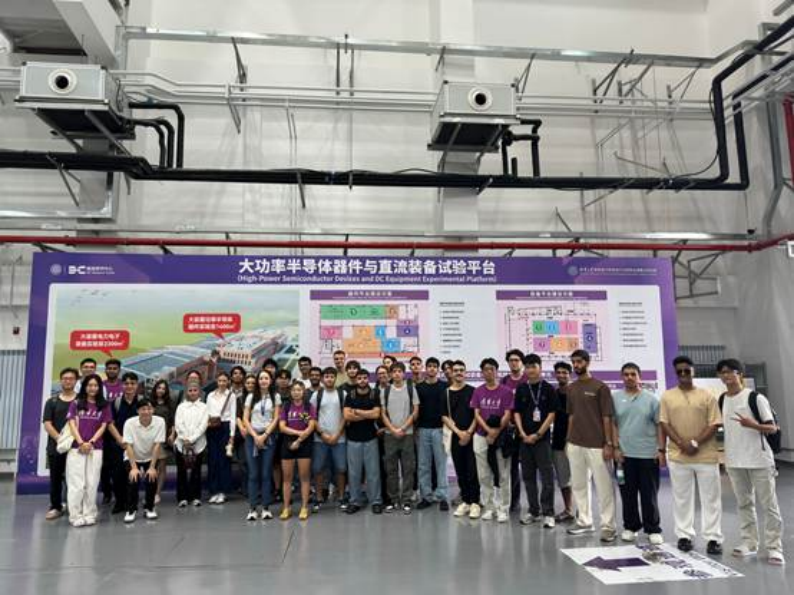
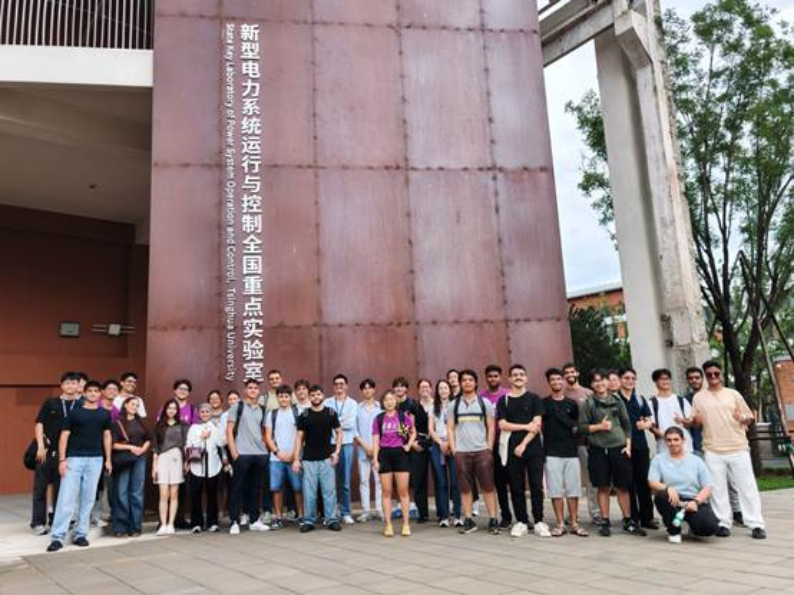
Visit to the State Key Laboratory
During industrial visits, participants went to State Grid Smart EV Network Technology Co., Ltd. and the NIO Beijing Experience Center, where they visited the State Grid smart EV charging network platform, EV battery swap stations and an EV experience center. Through on-site explanations, exchanges and field visits, they learned about new energy vehicles, charging and battery-swapping service platforms, battery swap stations, and vehicle-to-grid interaction technologies.
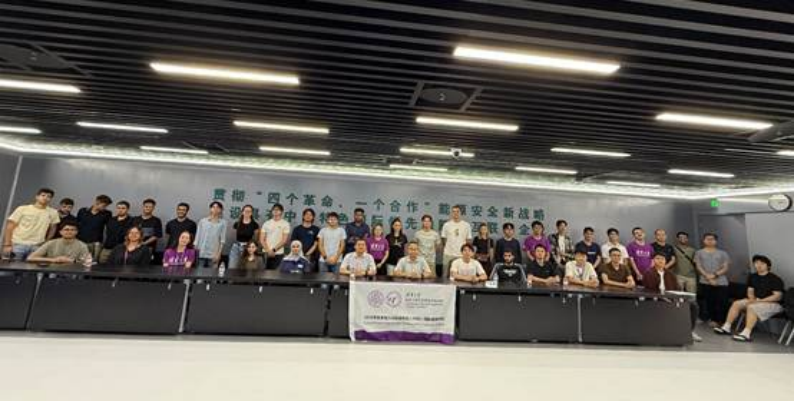
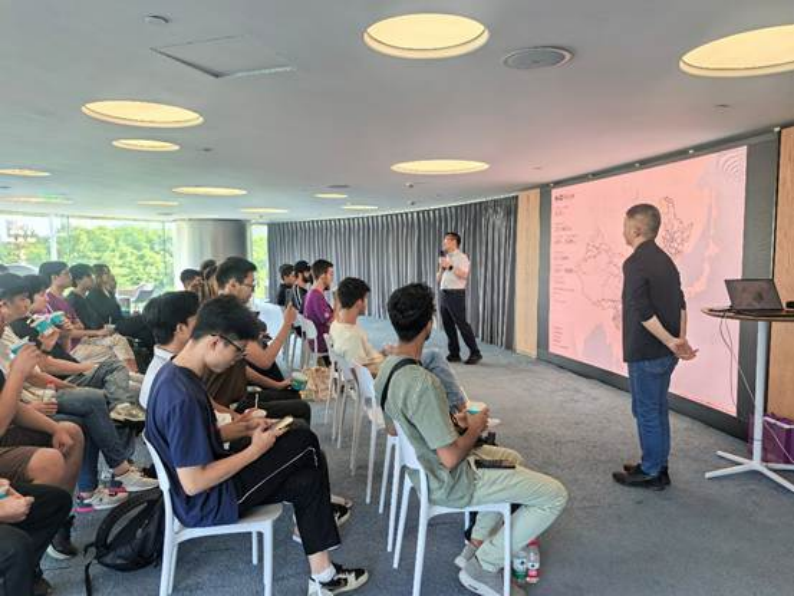
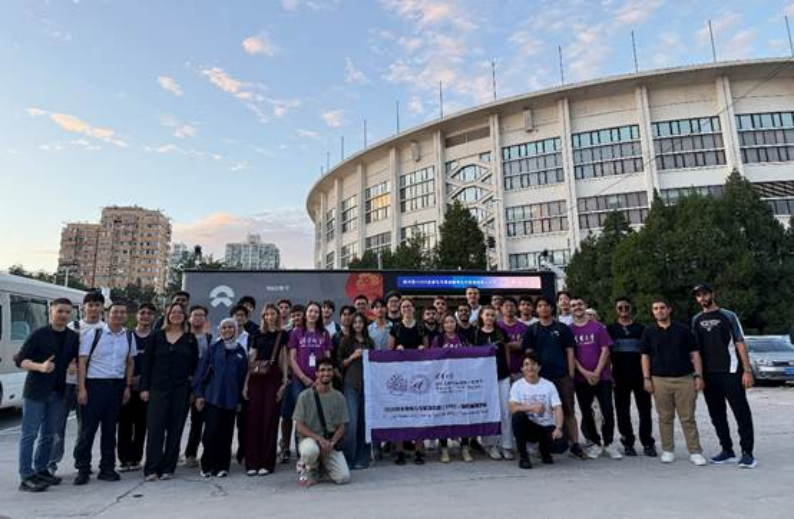
NIO Beijing Experience Center and Battery Swap Stations
Starting from typical energy application scenarios such as power grids and new energy vehicles, the practical visits also extended to new terminal energy-consuming scenarios such as intelligent manufacturing and robotics. Participants visited the Tsinghua University Basic Industry Training Center (iCenter) for exchange, where, guided by center instructors, they toured training laboratories for intelligent manufacturing, forming and processing, and robotics innovation, learned about advanced manufacturing equipment, robots and related engineering practice platforms, and got hands-on contact with intelligent equipment such as robots and robot dogs. During the visit, participants also observed practical teaching content such as precision engraving and student innovation works, further understanding Tsinghua University’s engineering practice teaching system and its "learning by doing" approach to cultivating engineering talents.
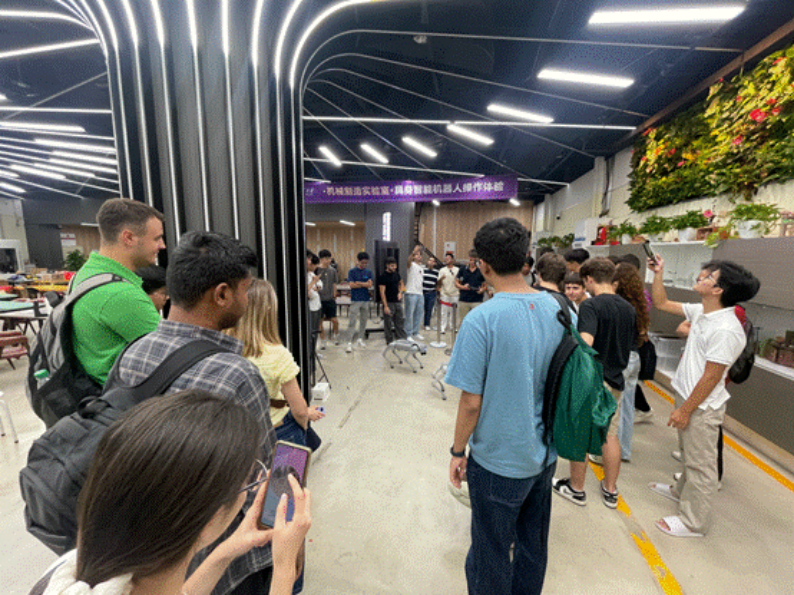
Tsinghua University Basic Industry Training Center (iCenter)
From August 21 to 22, the summer school further extended its practical classroom to Zhangbei, Zhangjiakou, Hebei Province. Participants visited the Jingneng (Zhangjiakou) Green Power Control Center, wind power projects and related new energy facilities, learning on the ground about large-scale new energy development, operation and dispatch, and green power transmission and consumption, and exchanged views with on-site staff on wind farm construction and operation, energy storage configuration and new energy base development.
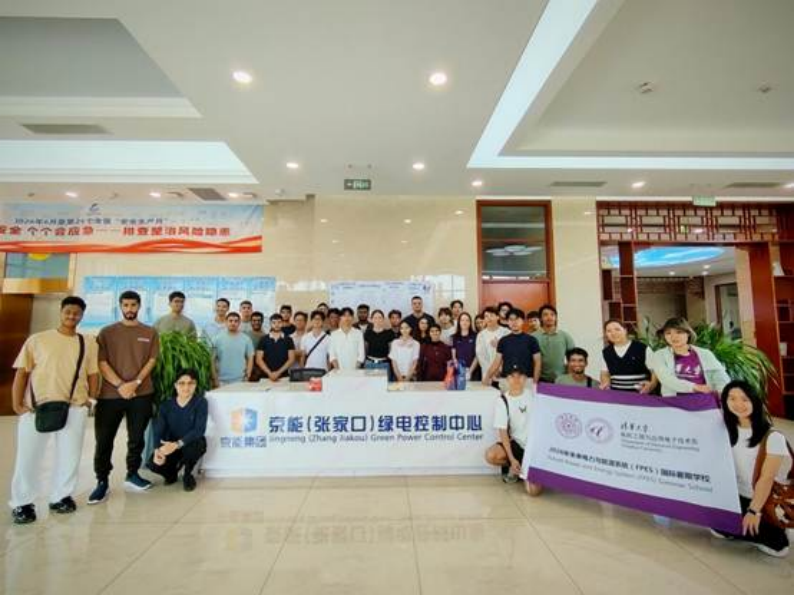
Zhangjiakou Green Power Control Center
From the control center to the wind turbine site, participants gained an intuitive sense of the construction scale of China’s northern new energy bases. The itinerary also incorporated local data centers and other facilities, enabling participants to further appreciate the interconnections among new energy resources, power infrastructure and new-type power-consuming loads.
Cultural Experience: Getting to Know China Beyond the Classroom
Beyond academic learning, the summer school also arranged a variety of Chinese cultural experience and humanities visit activities. In calligraphy and lacquer fan sessions, participants tried writing Chinese characters and making traditional lacquer fans; in the guzheng experience class, everyone was introduced to traditional Chinese music starting from basic fingering techniques; some activities also included Chinese martial arts (wushu) experiences. For many participants visiting China for the first time, these hands-on activities became a direct way to understand Chinese culture.
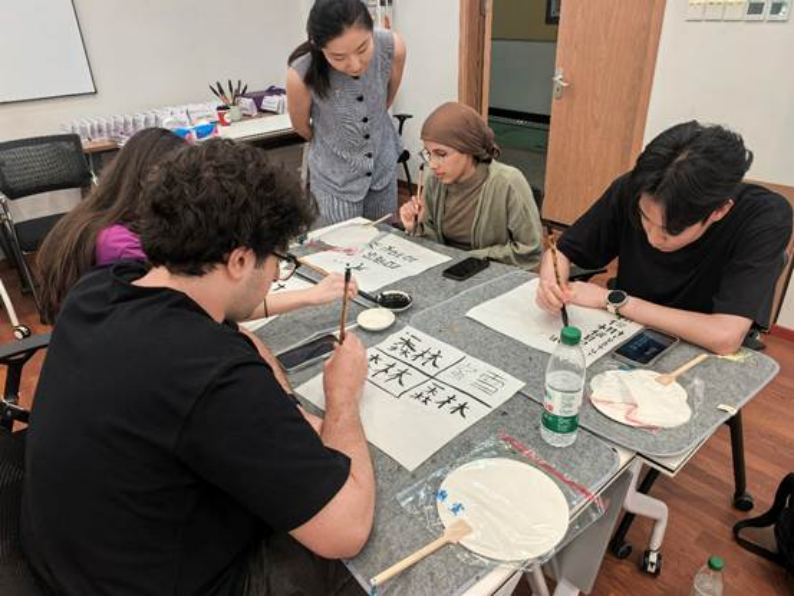
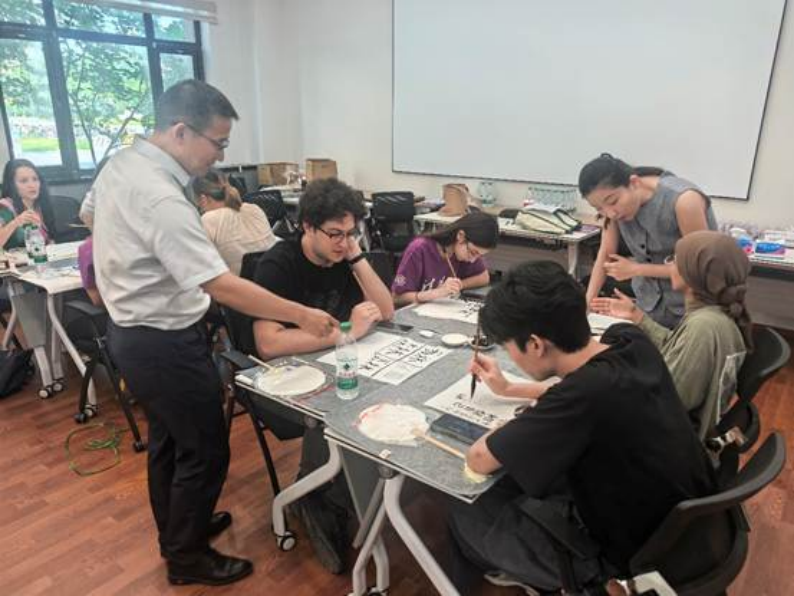
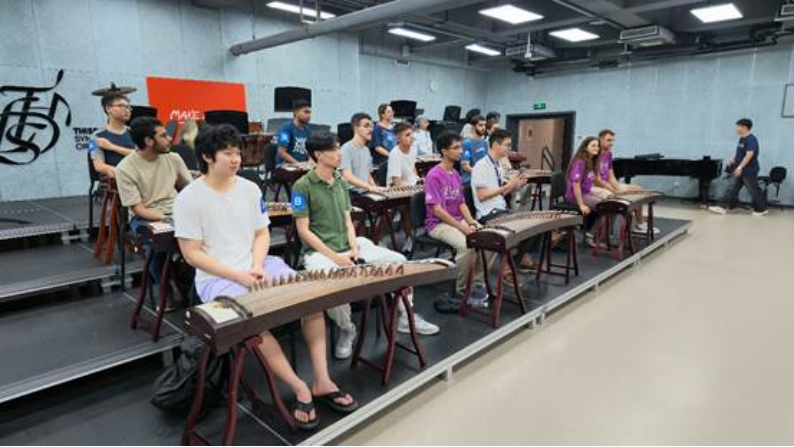
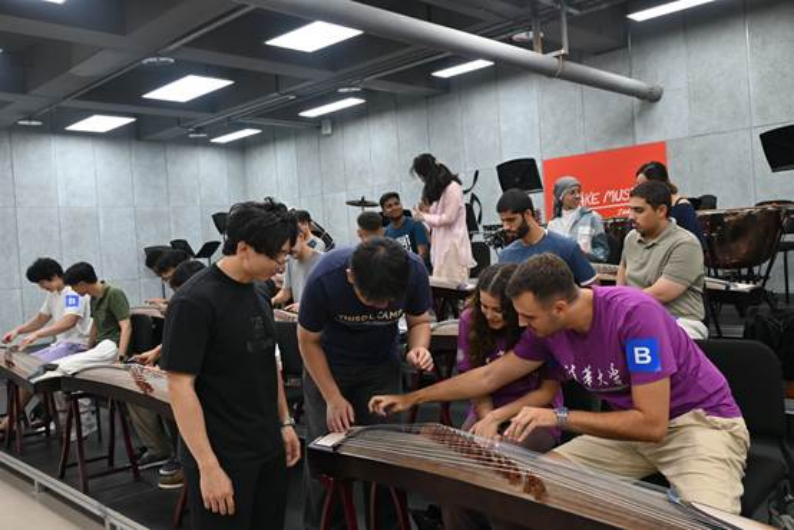
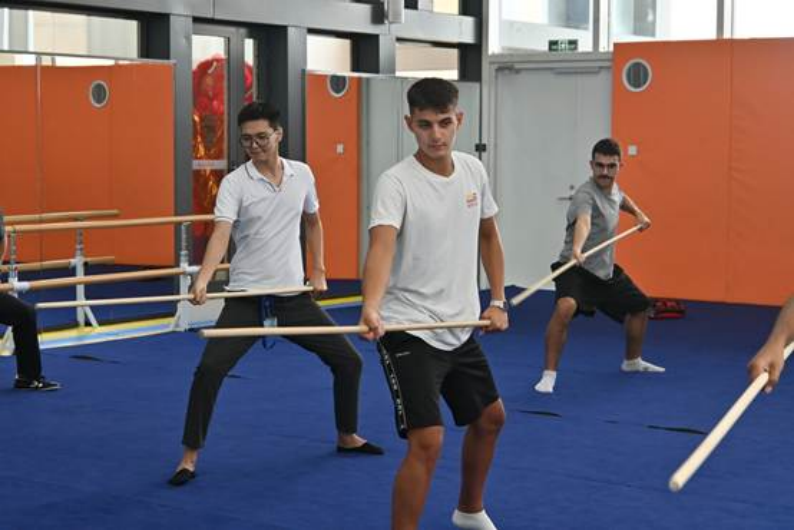
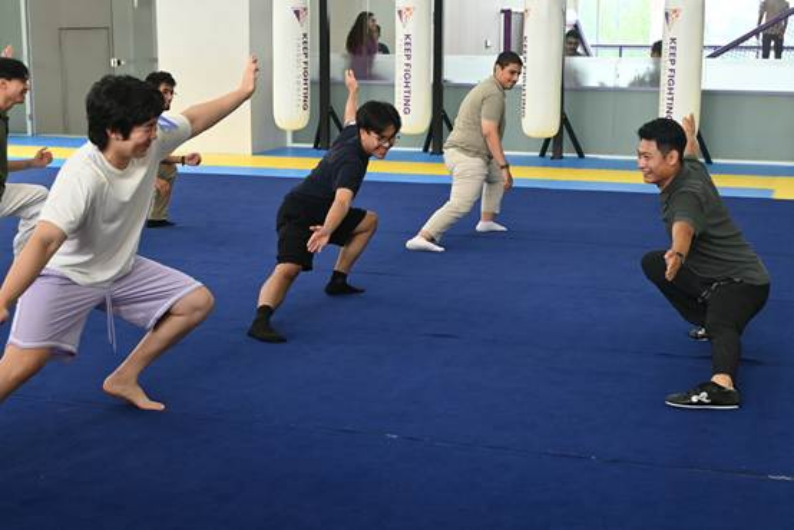
Calligraphy, Lacquer Fan, Guzheng and Martial Arts Experiences
Participants also visited the Temple of Heaven, the Beijing Ancient Architecture Museum and the Great Wall, getting to know the history of Beijing and China through architecture, history and urban space. During the study tour in Zhangbei, participants went to the Gongbala Grassland, where they expanded their understanding of the local natural environment and grassland culture after completing the energy industry visits.
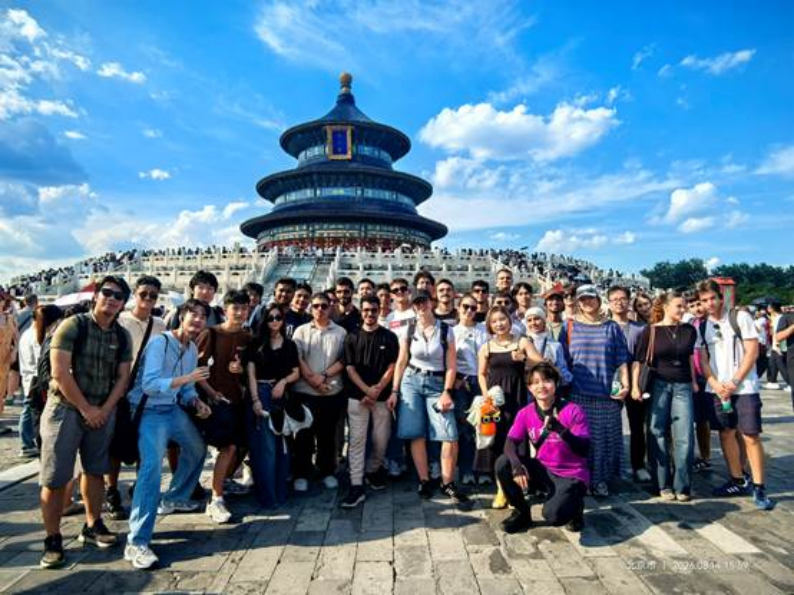
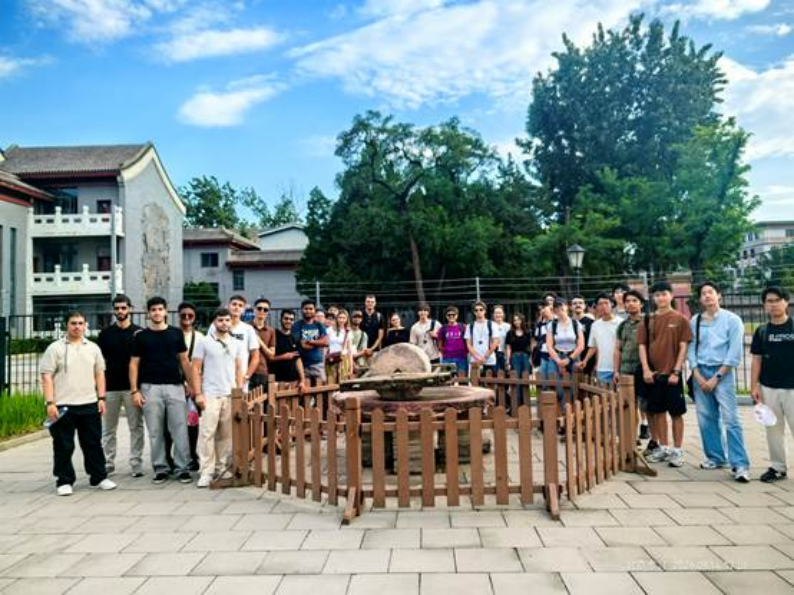
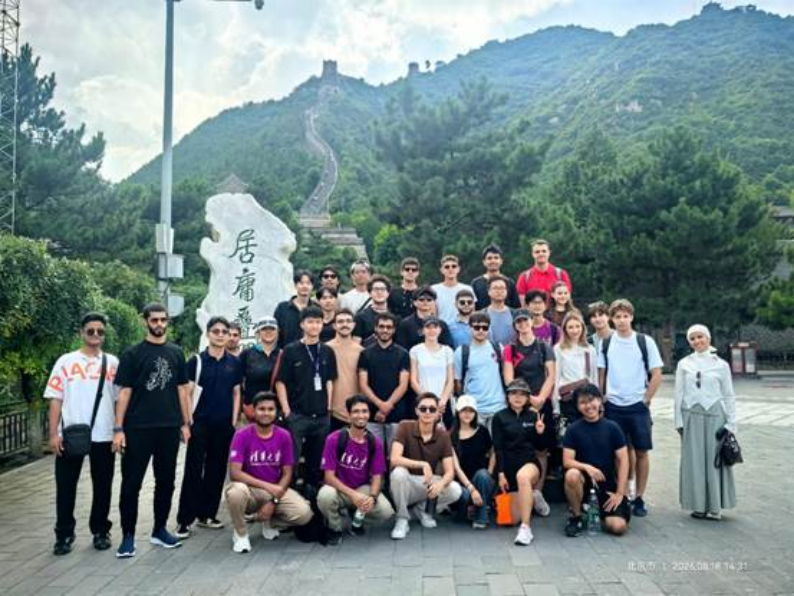
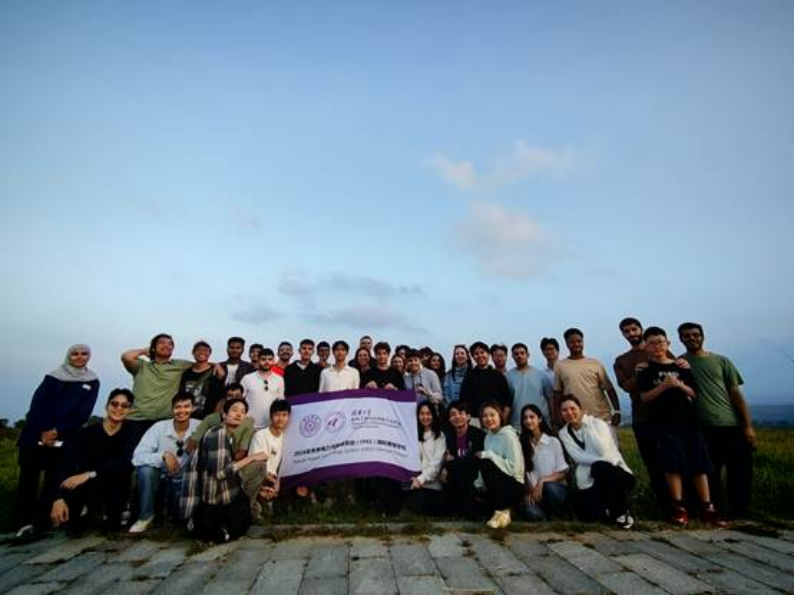
Temple of Heaven, Beijing Ancient Architecture Museum, the Great Wall and the Gongbala Grassland
From Strangers to Friends: Two Weeks of Exchange and Life
The 35 participants came from different countries and universities, and two weeks of shared learning also provided many opportunities beyond the classroom to get to know one another. During their spare time, students organized sports activities such as basketball on their own; some participants from the Middle East invited their peers to taste their hometown cuisine; some students shared their interests through musical instrument performances and other means.
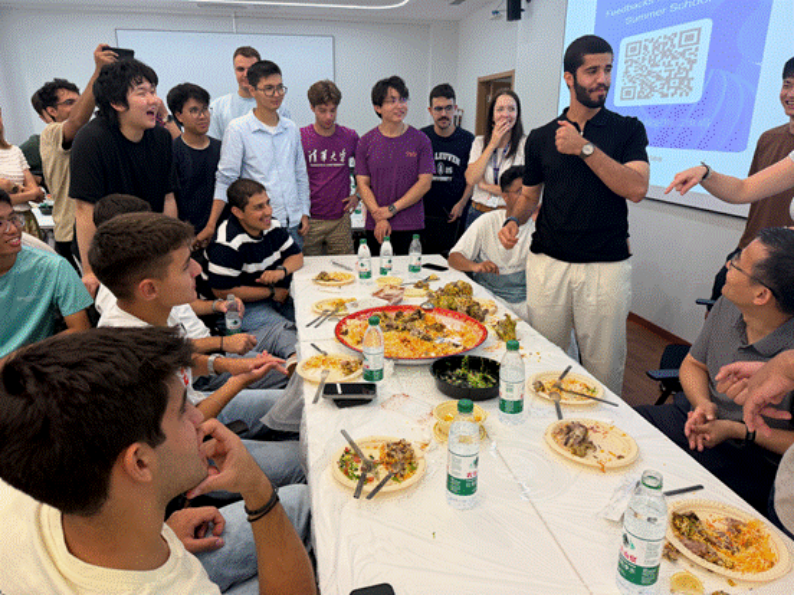
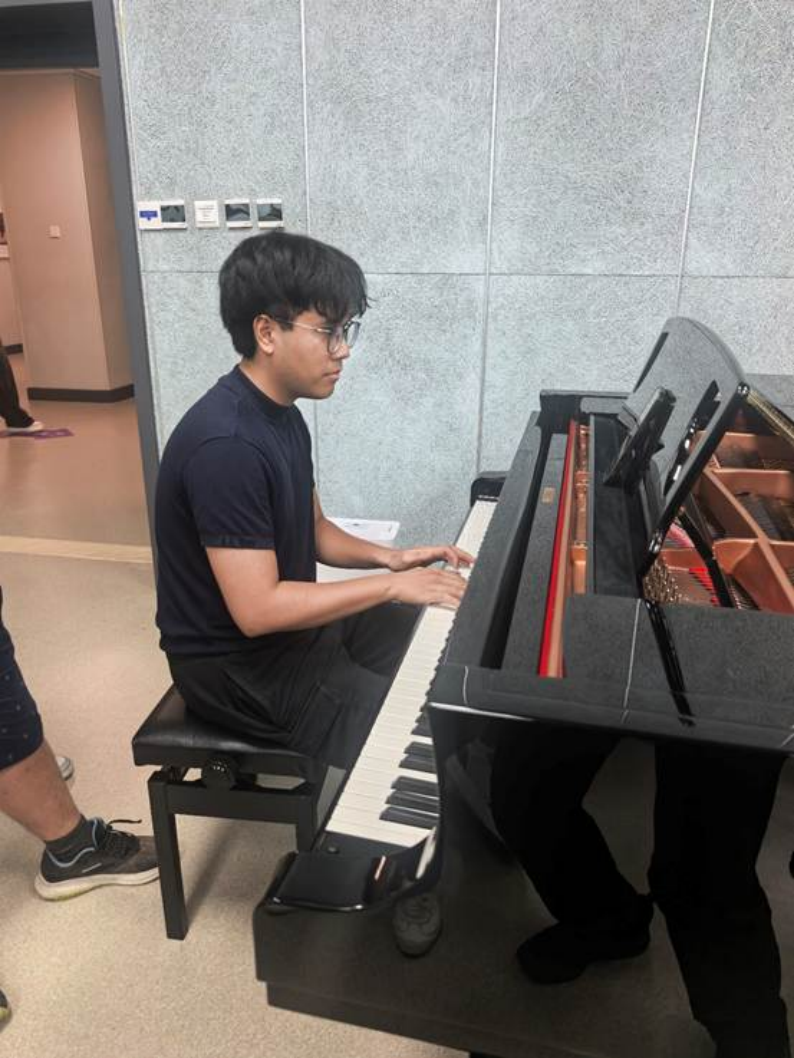
Middle Eastern Cuisine and a Student Performance
These exchanges were not pre-designed with fixed formats, yet they became experiences that many participants repeatedly recalled when looking back on the summer school. Young people with different academic backgrounds, languages and living habits gradually became familiar with one another in class, on trips and in discussions, building friendships that transcend countries and schools.
Before the summer school concluded, the participants also jointly prepared a special commemorative gift for the instructors and staff, recording in their own way the time they spent together at Tsinghua.
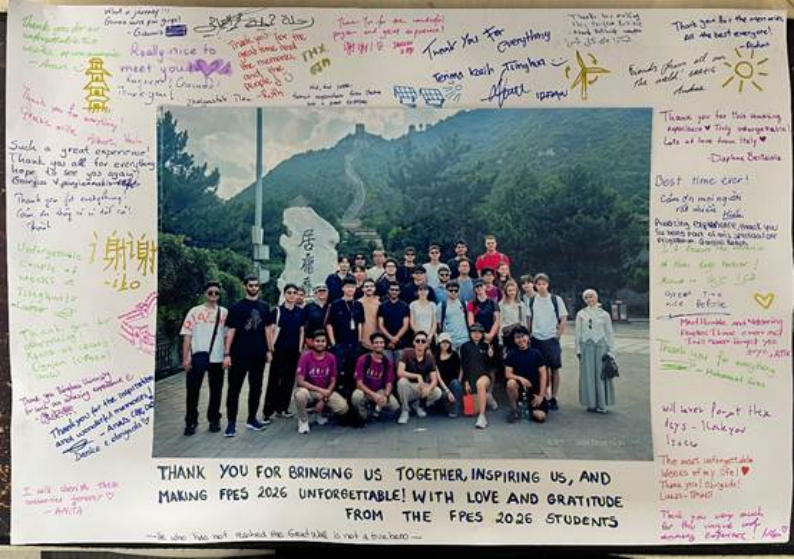
Commemorative Gift Jointly Prepared by the Participants
The Department of Electrical Engineering of Tsinghua University founded the International Summer School on Future Power and Energy Systems (FPES) in 2024. Over the past three years, the program has continued to bring together young scholars from around the world, building an international learning and exchange platform for the future development of power and energy through frontier courses, research and industry practice, and cross-cultural exchanges in multiple forms. As the program continues, the influence of the summer school has gradually extended beyond the event itself. Some previous participants have maintained contact with Tsinghua after the program: some joined Tsinghua’s research exchange program to further their learning and research cooperation; some chose to pursue doctoral degrees at Tsinghua. The academic connections and youthful friendships established by the summer school continue to grow, playing an active role in promoting exchanges among young talents, academic cooperation and talent cultivation in the field of power and energy.