On the morning of August 20, the 2026 Asian Universities Alliance (AUA) International Summer School on Future Power and Energy Systems (FPES), hosted by the Department of Electrical Engineering (DEE) of Tsinghua University, concluded successfully. Thirty-five participants from 25 universities across 21 countries took part in frontier courses, technical visits, cultural experiences and exchange discussions over two weeks. From August 21 to 22, participants continued their new energy industry and field study tour in Zhangbei, Zhangjiakou, Hebei Province, bringing this year’s summer school to a close.
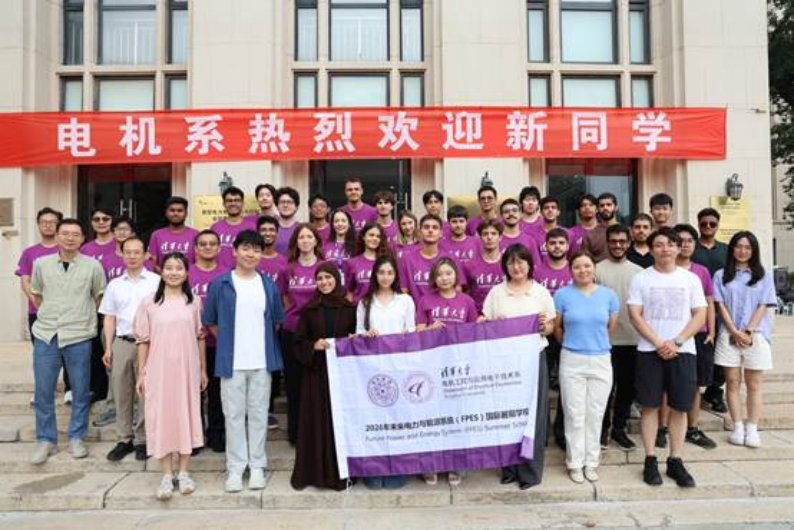
Group Photo at the Closing Ceremony
Before the closing ceremony, participants presented group reports on the power system transition of their own countries or regions. The presentations analyzed plans for power system transition and the practical problems faced from perspectives such as power source structure adjustment, energy storage technology application and future grid operation, demonstrating through cases from different countries and regions the diversity of global power and energy transition pathways. This was also a session for the summer school to examine participants’ learning outcomes and cultivate their collaboration and communication skills.
The closing ceremony was hosted by Zhang Pengcheng, faculty member of DEE. Professor Sun Kai, Deputy Head of DEE, delivered the opening address. He noted that the development of future power and energy systems is an important issue confronting all countries in the world, and hoped that participants would carry the knowledge, thoughts and friendships gained at the summer school into their future studies and work. The Department of Electrical Engineering of Tsinghua University also looks forward to maintaining contact with all participants and welcomes them to return to Tsinghua in the future for study, research and academic exchanges.
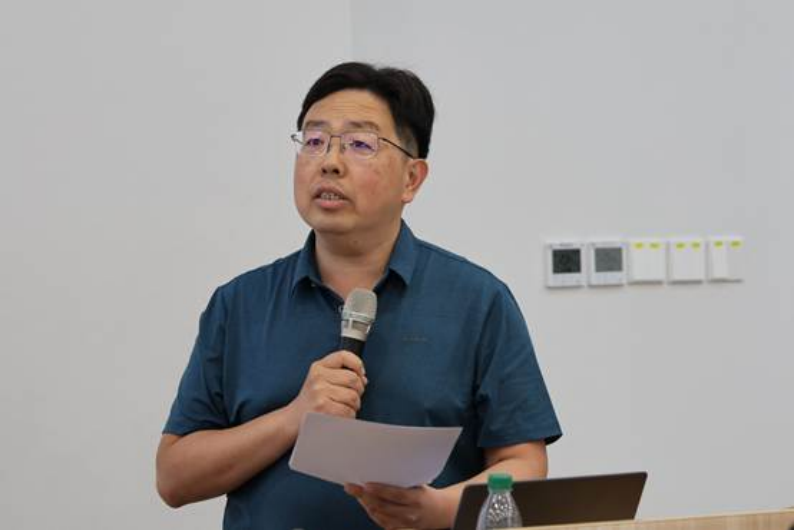
Sun Kai Delivering the Address
Professor Hu Zechun, head of this summer school from DEE, then summarized the two weeks of activities. He reviewed the classroom learning, technical visits and cultural activities that participants experienced together, and gave positive evaluations of the research and presentations conducted by each group on power system transition in different countries or regions. He noted that different countries have their own characteristics in energy development stages and technology pathways, but also face common issues such as new energy development, re-electrification and energy storage application. Hu Zechun also thanked the instructors, staff and teaching assistant team for their work for the summer school, wished all participants smooth progress in their future studies, and welcomed everyone to come to China in the future for travel, study or work.
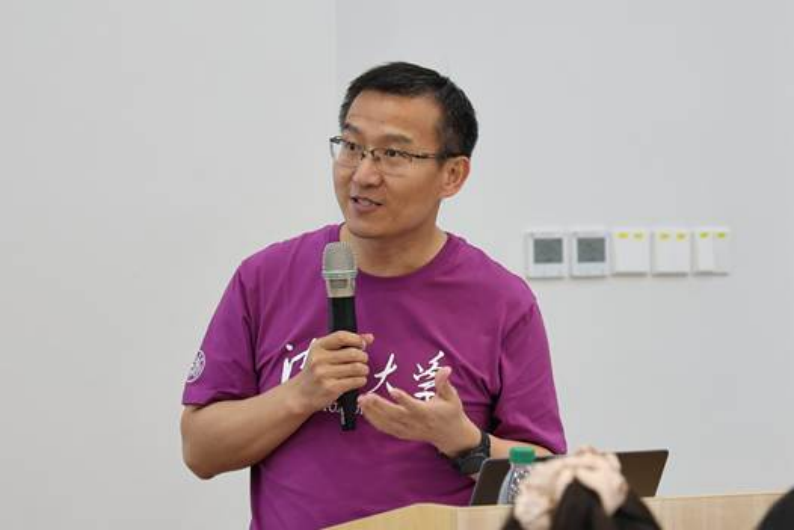
Hu Zechun Summarizing the Summer School Activities
Anran Kang from Canada, Daphne Bertaiola from Italy, Dinh Phong Nguyen from Vietnam and Ahmed Nabil Abubakr Batheeb from Yemen shared their learning and life experiences over the two weeks as student representatives.
Kang Anran noted that the abundant questioning and discussion in the courses helped her connect the theories learned in class with real engineering, and that the laboratory visits, NIO battery swap technology and 3D printing also left a deep impression on her. Bertaiola spoke from the perspective of cultural experience — from writing her own Chinese name to trying traditional cultural activities such as guzheng and martial arts — and said that two weeks of shared learning and life also brought students from different countries gradually from strangers to friends.
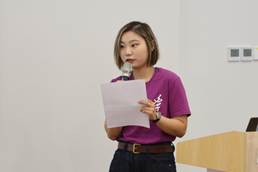
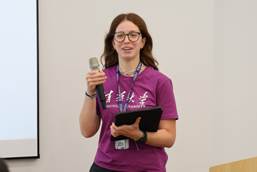
Anran Kang and Daphne Bertaiola Speaking
Dinh Phong Nguyen said that the summer school combined theoretical learning, engineering practice and cultural experience, enabling classroom knowledge such as renewable energy and new-type power systems to further correspond to real industries and energy systems. He looks forward to returning to China again in the future. Ahmed Nabil Abubakr Batheeb, drawing on his own professional learning experience, said that the summer school exposed him to technologies such as DC transmission that he had previously known little about, and also broadened his understanding of energy issues through exchanges with students from different countries.
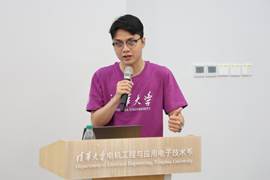
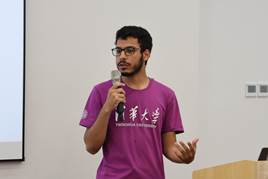
Dinh Phong Nguyen and Ahmed Nabil Abubakr Batheeb Speaking
At the end of the ceremony, Professor Sun Kai, Professor Hu Zechun and some of the instructors jointly presented completion certificates to all participants, marking the official conclusion of the Beijing phase of the summer school.
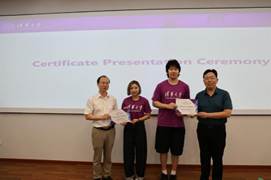
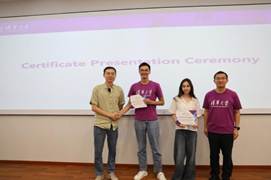
Sun Kai, Hu Zechun and Others Presenting Completion Certificates to the Participants
Beyond the Classroom and the Grassland: The Field Study of the Summer School in Zhangbei, Zhangjiakou
On August 21, all participants headed to Zhangbei, Zhangjiakou for field study, conducting new energy industry surveys and regional cultural experience activities.
The first stop of the practice team was the Jingneng (Zhangjiakou) Green Power Control Center. The project is a demonstration project for comprehensive renewable energy application in Beijing, winning the 2022–2023 National Quality Project Gold Award, and is also the first onshore wind power project of one million kilowatts in China to receive this honor. The project has a total installed capacity of 1.15 million kilowatts, delivers 3.064 billion kilowatt-hours of green electricity annually, and can reduce carbon dioxide emissions by 3.05 million tons. As an important supporting project for the Beijing Winter Olympics, it has supplied 170 million kilowatt-hours of green power to the Olympic venues cumulatively, ensuring 100% green power supply for the venues, and is a benchmark project for coordinated energy development in the Beijing-Tianjin-Hebei region. Under the explanations of the base staff, participants systematically learned about key issues such as dispatch control, green power consumption and cross-regional green power transmission of large onshore wind power bases, and engaged in lively exchanges with on-site experts on wind power consumption, energy storage configuration, and project construction, operation and maintenance.
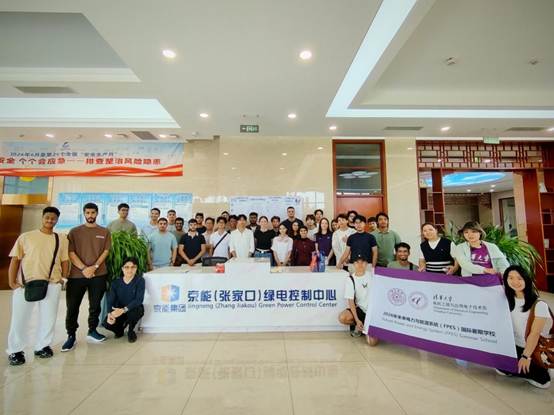
Visit to the Jingneng (Zhangjiakou) Green Power Control Center
The study team then visited the Zhangbei Wind Power Theme Park, located along the Grassland Sky Road, where rows of wind turbines stand in harmony with the vast grassland, blending green industrial landscapes with natural scenery. Participants experienced at first hand the realistic picture of the wind power industry taking root in the grassland, understood the practical pathways for the coordinated development of wind power development and ecological protection, and directly appreciated the immense scale and development potential of China’s northern wind and solar power base construction.
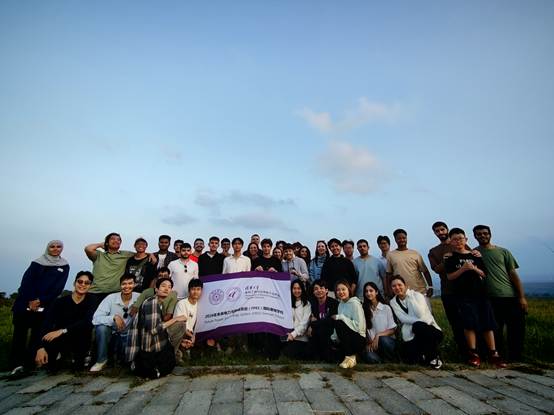
Visit to the Zhangbei Wind Power Theme Park
On August 22, the practice team continued its grassland humanities study, heading to the Gongbala Grassland to learn more about the natural geographic features and ethnic culture of the Zhangbei region. The Gongbala Grassland means "the place of deep springs" in Mongolian, and historically served as the royal horse ranch of the Qing Dynasty. Through field visits, participants experienced the natural environment and regional features of the Bashang grassland, and combined with the new energy industry visits of the previous day, gained a more intuitive understanding of the relationship among resource endowments, ecological environment and industrial development in the Zhangbei region. In the afternoon, all participants concluded the Zhangbei study tour and returned to Beijing by bus.
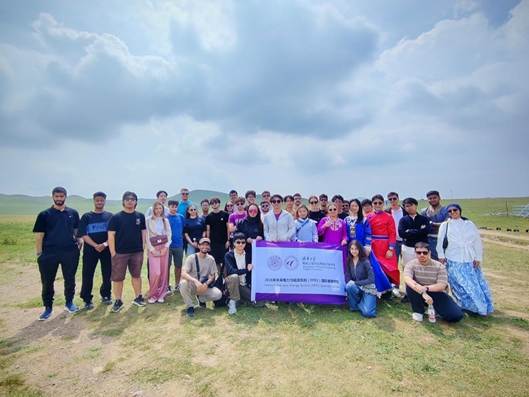
Tour of the Gongbala Grassland
This year’s FPES summer school built a multi-level teaching model of "Tsinghua classroom + Beijing visits + Zhangbei field study", organically integrating frontier knowledge learning, engineering practice awareness and cross-cultural exchange. The program shares with young scholars around the world the latest developments in the energy field and China’s practice, promotes exchange and mutual learning among young people from different countries and academic backgrounds on major energy transition issues, and, through visits to research platforms, the industrial frontline and new energy bases, enhances participants’ understanding of China’s energy transition process and development pathway. The summer school further expanded the bond of exchange between the Department of Electrical Engineering of Tsinghua University and international young scholars, playing an active role in deepening international educational cooperation in the field of power and energy, promoting exchange and mutual learning among young talents, and jointly addressing global energy transition challenges.