On September 15, the invited lecture of the 16th Jingde Forum was held. Professor Michael Grätzel, Foreign Member of the Chinese Academy of Sciences and professor at École Polytechnique Fédérale de Lausanne (EPFL), delivered an invited academic lecture on wide-bandgap perovskite and highly efficient multi-junction tandem solar cells. The event was attended by Zheng Zedong, Party Secretary of the Department of Electrical Engineering (DEE); DEE Professor Huang Songling and Associate Professors Yi Chenyi and Li Shisong; Professor Hua Ruimao and Associate Professor Ma Dongxin of the Department of Chemistry; Professor Lin Hong of the School of Materials Science and Engineering; Professor Xiao Lixin of Peking University; and more than 160 experts, scholars, faculty members and students from Tsinghua University, Peking University, the Chinese Academy of Sciences, Beijing Institute of Technology, University of Science and Technology Beijing, The Hong Kong Polytechnic University and other universities and research institutions. The lecture was moderated by Associate Professor Yi Chenyi of DEE.
At the start of the event, Yi Chenyi introduced the purpose of the Jingde Forum and Professor Grätzel’s major academic achievements, highlighting his pioneering contributions to mesoscopic photovoltaics, dye-sensitized solar cells and perovskite photovoltaics. Zheng Zedong then presented Professor Grätzel with the commemorative certificate and gift of the Jingde Forum.
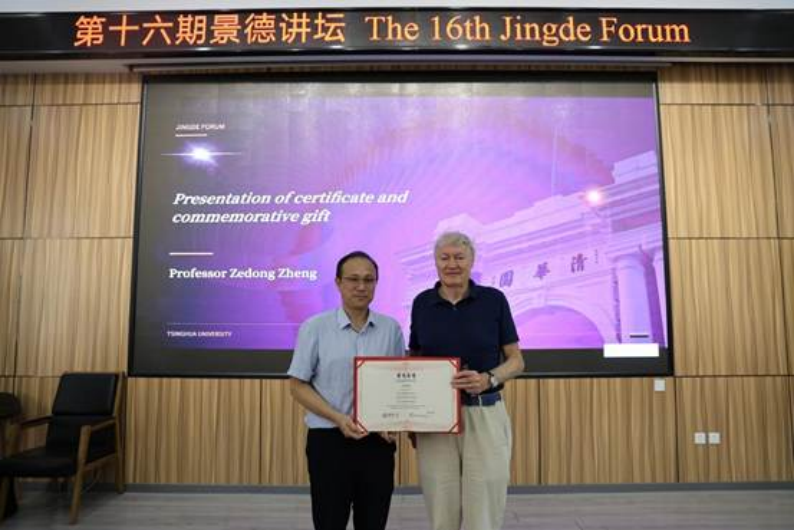
Zheng Zedong presents the Jingde Forum commemorative certificate to Professor Michael Grätzel
Professor Grätzel delivered an academic report entitled “Wide-Bandgap Perovskite and Multi-Junction Tandem Solar Cells with an Efficiency of Over 33%”. Against the backdrop of continuously growing global electricity demand and the development of renewable energy, he pointed out that multi-junction perovskite solar cells represent an important technological direction for improving the efficiency of solar energy utilization, and that the photovoltaic conversion efficiency and operational stability of wide-bandgap perovskite top cells play a key role in enabling higher performance of tandem solar cells.
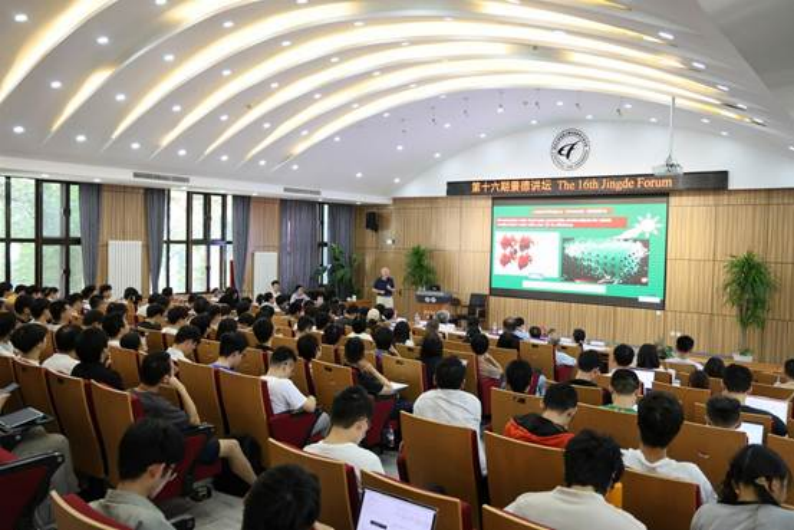
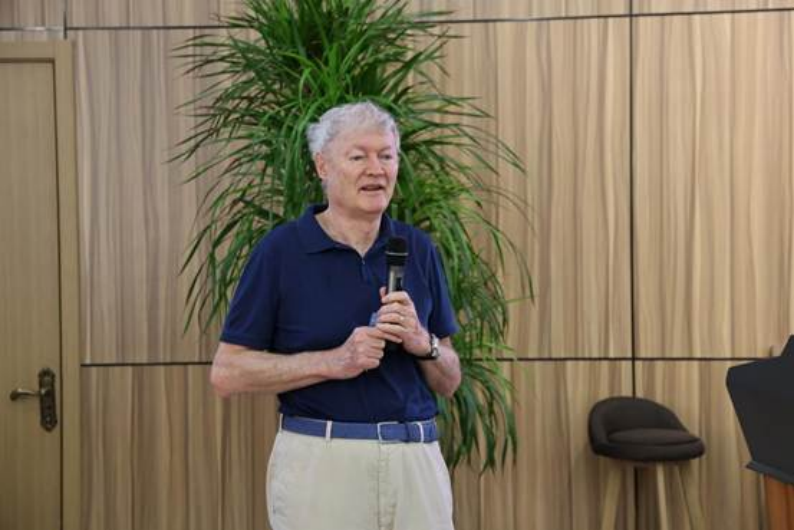
Professor Michael Grätzel delivers the Jingde Forum academic lecture
Following the report, faculty members and students exchanged views with Professor Grätzel on topics including the stability of wide-bandgap perovskite materials, the efficiency improvement of multi-junction tandem devices, and related technological development and applications. Drawing on his own research, Professor Grätzel responded to each question, and the exchanges were in-depth and lively.
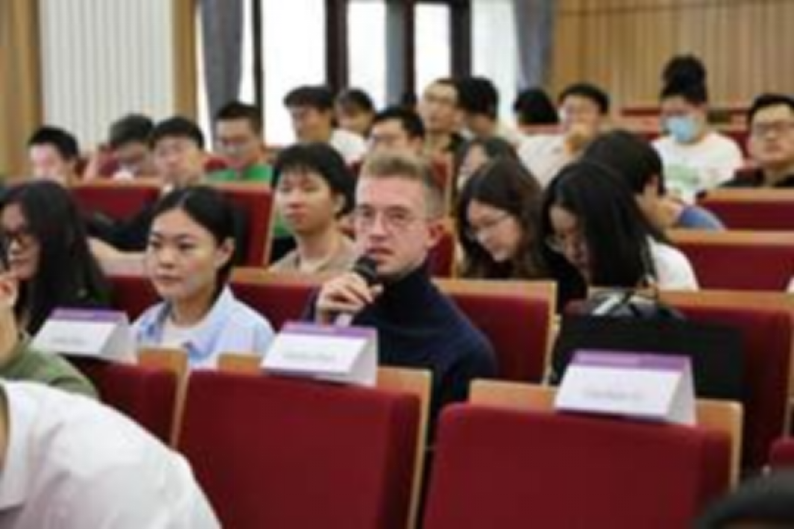
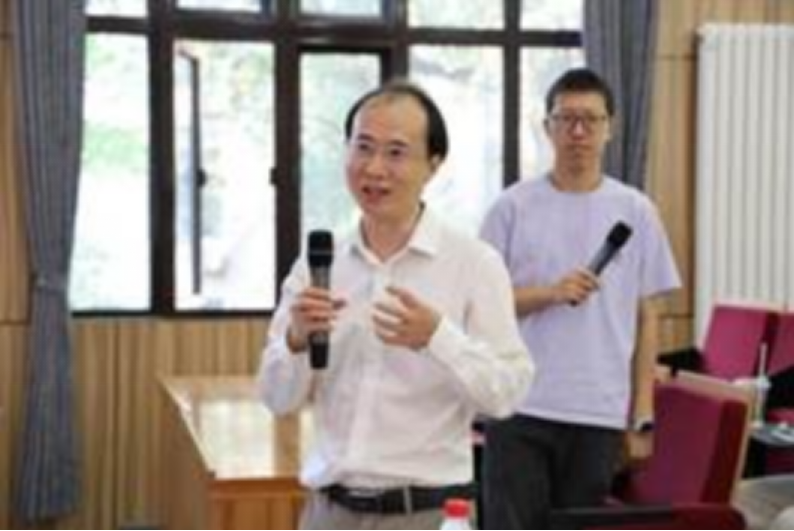
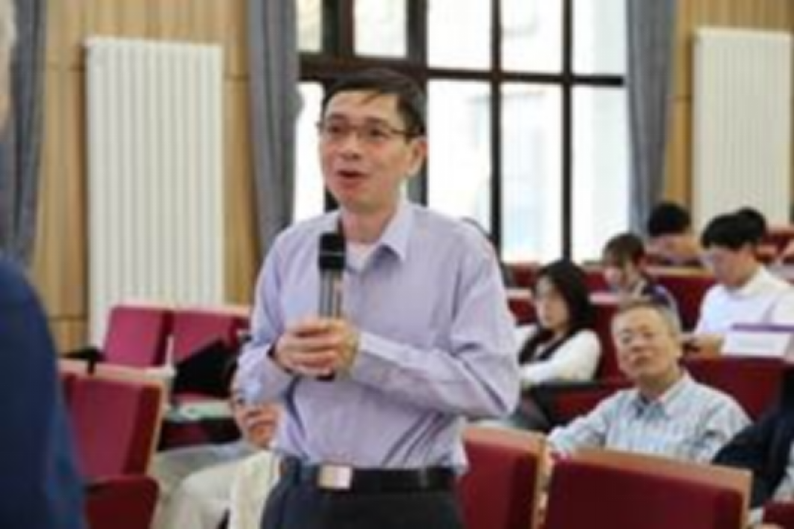
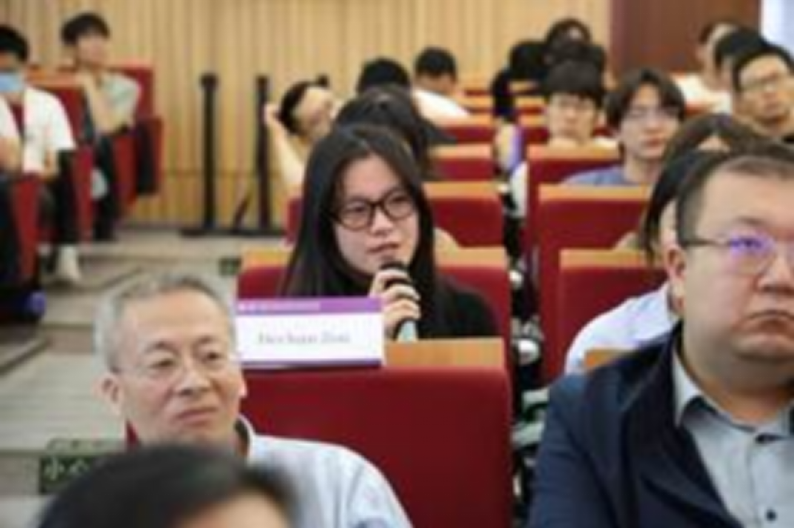
Q&A session
This report showcased the frontier progress in wide-bandgap perovskite and multi-junction tandem photovoltaic technologies, providing an opportunity for the attending faculty members and students to gain an in-depth understanding of the development directions of highly efficient solar cells.
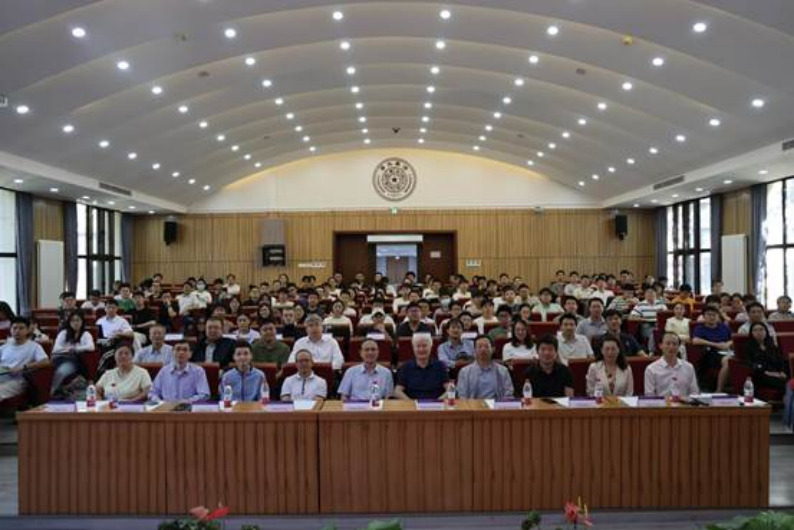
Group photo of participants
About the Jingde Forum
Gao Jingde was a renowned power engineering expert in China, an outstanding educator, a Member (Academician) of the Chinese Academy of Sciences, a former President of Tsinghua University, the founder of the State Key Laboratory of Power System and Generation Equipment, and an IEEE Fellow.
The Jingde Forum aims to carry forward the fine traditions of the Department of Electrical Engineering, commemorate a group of outstanding predecessors represented by President Gao Jingde, and pass on their spirit of rigorous scholarship and courageous innovation. The Forum mainly invites influential experts and scholars from home and abroad in fields such as electrical engineering, energy and higher education to give lectures on frontier scientific and technological advances, major strategic planning, talent cultivation models and educational innovation.
Guest Introduction
Michael Grätzel is a Swiss physical chemist and serves as Professor of Physical Chemistry and Director of the Laboratory of Photonics and Interfaces at École Polytechnique Fédérale de Lausanne (EPFL). He is a Foreign Member of the Chinese Academy of Sciences, a Foreign Member of the Royal Society, a Member of the Academia Europaea, a Member of the German National Academy of Sciences Leopoldina, a Fellow of the National Academy of Inventors, a Member of the Royal Academy of Engineering of Spain, and a Member of the Swiss Academy of Engineering Sciences. An international pioneer in mesoscopic photovoltaics and a key founder of perovskite photovoltaics, he enjoys broad international renown for initiating research on dye-sensitized solar cells and has long been engaged in research on mesoscopic photoelectric conversion, perovskite photovoltaics and artificial photocatalysis. Professor Grätzel has been awarded 17 honorary doctorates by universities in Europe, Asia, the Americas and Africa, has published more than 1,800 papers, and has received numerous international awards, including the Millennium Technology Prize, the Balzan Prize, the Marcel Benoist Prize, the Royal Society of Chemistry Centenary Prize, the Global Energy Prize and the Einstein World Award of Science.