From August 31 to September 4, the 3rd International Summer School on IBR-dominated Power Systems was held at the University of Strathclyde in the UK. The five-day summer school covered modeling and control, stability and reliability analysis, fault handling and protection, AI applications and economic analysis of power systems dominated by inverter-based resources, and also featured parallel small-group classes, poster exchanges and technical visits. The lecturing experts comprised 34 specialists from 10 countries, 20 universities and industry, and the 88 participants came from 56 institutions in 20 countries. DEE Professor Sun Kai and Associate Professor Zhang Ning were invited to deliver on-site lectures, and Professor Wang Xiongfei delivered an online lecture; 8 master’s and doctoral students of DEE attended the summer school.
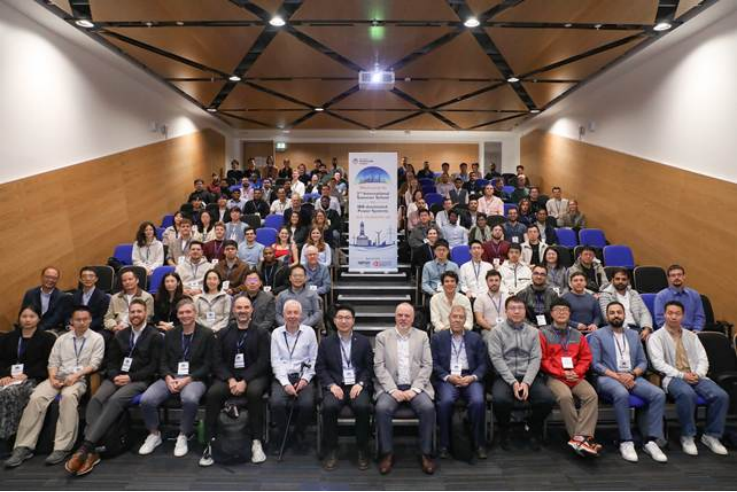
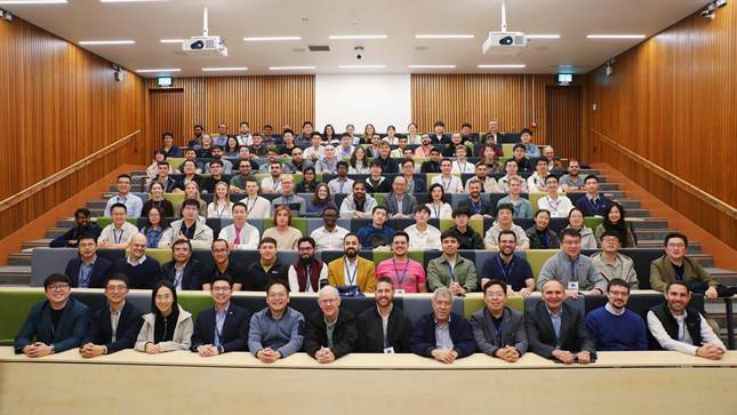
Group photo of summer school participants
DEE Faculty Members Invited to Teach at the Summer School
On August 31, Wang Xiongfei delivered a lecture to the summer school online, entitled “Grid-Forming Converters under Large Disturbances”. Targeting issues such as controlled fault currents, changing system strength and the insufficient adaptability of conventional protection after the large-scale integration of high-proportion power electronic equipment, he explained the dynamic responses and control methods of grid-forming converters under large disturbances such as voltage sags and short-circuit faults, analyzed the impacts of different control strategies on fault ride-through capability, transient stability and protection coordination, and further discussed how to improve the safe and stable operation of new power systems under complex disturbances by optimizing converter control, enhancing system support capability and promoting control-protection coordination.
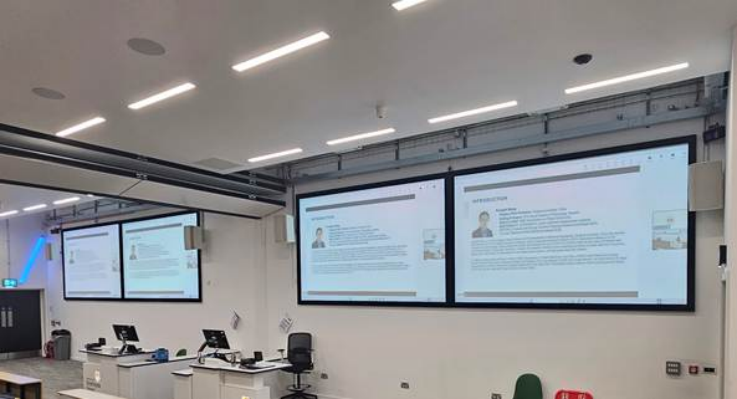
Wang Xiongfei delivers an online lecture
On September 2, Sun Kai and Zhang Ning delivered lectures at the summer school. Sun Kai’s lecture was entitled “Advanced Power Electronics for Flexibility Enhancement in Distribution Networks”. Targeting the voltage fluctuations, wideband harmonics, three-phase unbalance and transient stability issues caused by the high-proportion integration of distributed photovoltaics, wind power, EV charging facilities and various new loads into distribution networks, he introduced the latest regulation technologies for PV inverters, energy storage converters, charging piles, new-load converters, flexible interconnection equipment for distribution/microgrid networks and power quality management equipment, and discussed development directions such as coordinated power quality management, transient emergency control and optimal allocation of multiple resources.
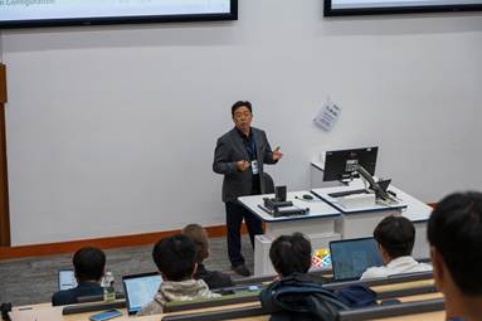
Sun Kai delivers a keynote lecture
Zhang Ning’s lecture was entitled “Data-Driven Security and Stability Rules for Power System Operation and Planning”. Addressing the problems that system inertia and short-circuit strength decline and operating boundaries become harder to characterize after the integration of high-proportion power electronic resources, he introduced methods for extracting interpretable security and stability rules from operating data, and explained how to embed these rules into economic dispatch and unit commitment optimization, and how to make operational decisions under voltage stability and transient stability constraints.
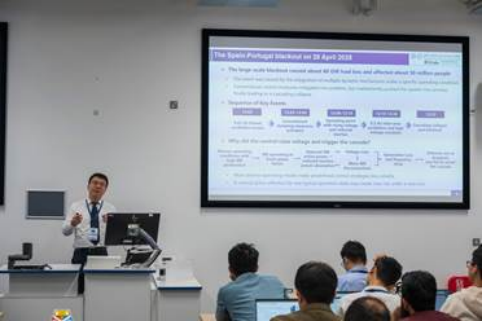
Zhang Ning delivers a keynote lecture
In addition, during the summer school, Sun Kai and Zhang Ning served as moderators of some course modules and organized on-site questions and discussions around the presentations. The two teachers actively guided participating faculty members and students to exchange views with the lecturers, encouraged in-depth discussions, promoted the collision of ideas and exchange of thoughts across different research backgrounds, and created a high-quality, highly interactive academic atmosphere for the summer school.
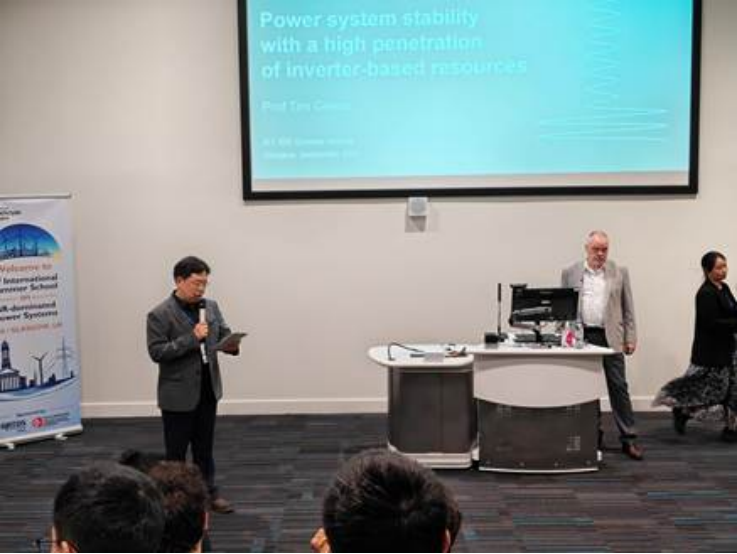
Sun Kai moderates the presentation session
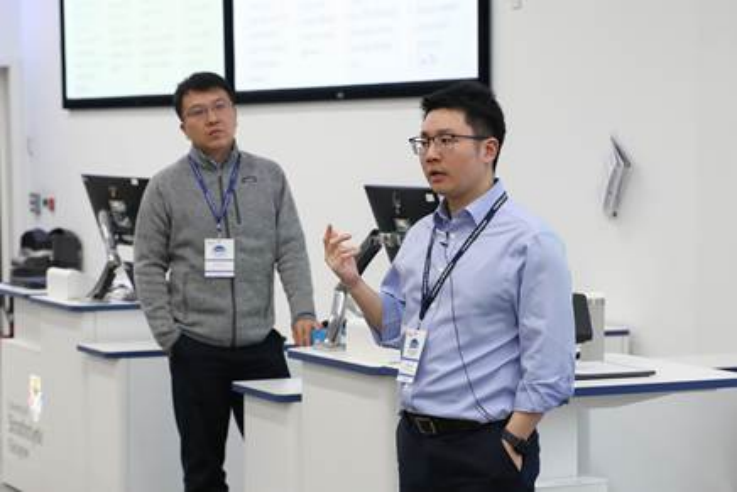
Zhang Ning moderates the presentation session
DEE Graduate Students Actively Participate in Exchanges
In this summer school, 8 graduate students of DEE from various research directions including power systems and power electronics attended the courses, and actively participated in on-site discussions and exchange activities based on their respective research directions.
The special courses covered stability analysis, operation planning, control and protection of power-electronics-based power systems. After the presentations, DEE students engaged in in-depth exchanges with the guest lecturers on the course content and discussed key technical issues with the speakers.
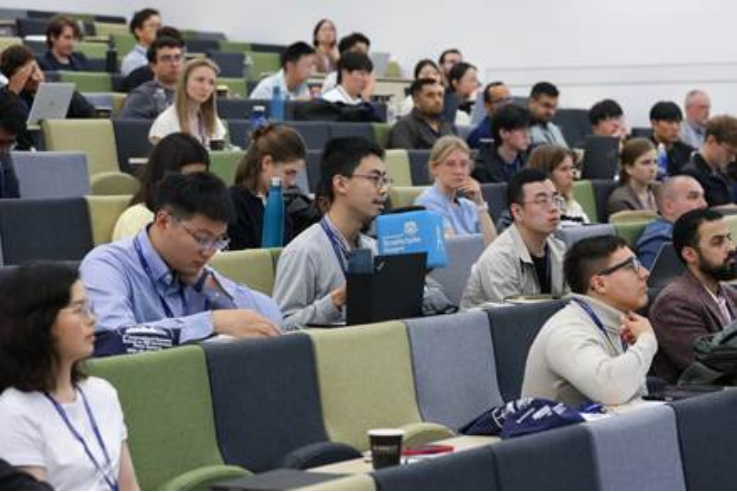
Li Zhongze raises a question during the presentation session
During the poster exchange session, Chen Muyang presented his research poster and introduced his research ideas and phased achievements to the participating faculty members and students, engaging in in-depth discussions with graduate students from different research directions on key issues, technical methods and result analysis. Other team members also actively participated in the poster discussions, learning about the research progress of different teams and discussing common technical concerns.
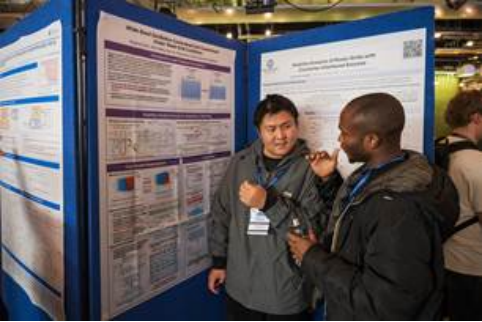
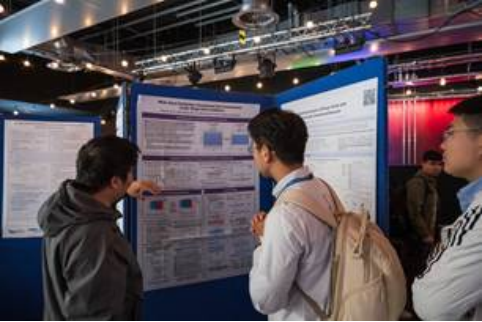
Chen Muyang presents his poster and exchanges views
The summer school was co-organized by the Tsinghua-Imperial Joint Research Centre for Smart Power and Energy Systems. The successful organization of the summer school further enhanced the international influence of Tsinghua University’s Department of Electrical Engineering in the field of power-electronics-based power systems. The students gained a concentrated understanding of research progress in the modeling, stability analysis, protection, operation optimization and new power electronic equipment of power systems dominated by power electronic equipment, and the five days of joint learning enhanced exchanges between faculty and students, bringing new ideas to the students’ subsequent research work.
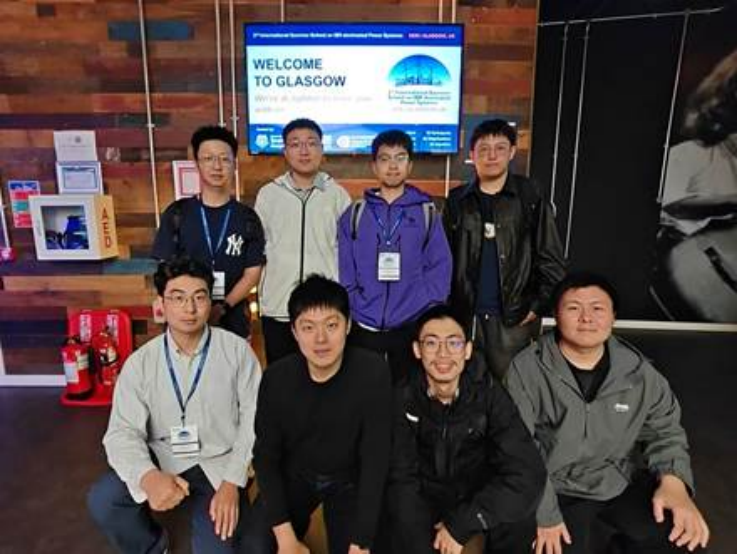
Group photo of DEE participants at the summer school
About the Summer School
The International Summer School on IBR-dominated Power Systems was co-founded by the Department of Electrical Engineering of Tsinghua University and the Department of Electrical and Electronic Engineering of Imperial College London, with organizational support from the Tsinghua-Imperial Joint Research Centre for Smart Power and Energy Systems. It was held at Imperial College London and Tsinghua University in 2024 and 2025 respectively. This year’s summer school was the third edition, and the five-day courses covered grid operation, planning and control, stability assessment, HVDC transmission technology, microgrids, new loads, hardware-in-the-loop simulation and AI applications. In addition to the courses, the summer school also arranged poster exchanges and technical visits, providing face-to-face exchange opportunities for faculty and students from universities and enterprises.