On March 13, a seven-member delegation led by Professor Zhong Zhiyong, Head of the Department of Electrical and Electronic Engineering (EEE) and Chair Professor in Power Systems and Engineering of The Hong Kong Polytechnic University (PolyU), visited the Department of Electrical Engineering and Applied Electronics (EEA) of Tsinghua University. A six-member group of EEA led by Professor Kang Chongqing, Dean of EEA, received the visitors. The exchange meeting was chaired by Sun Kai, Deputy Dean of EEA.
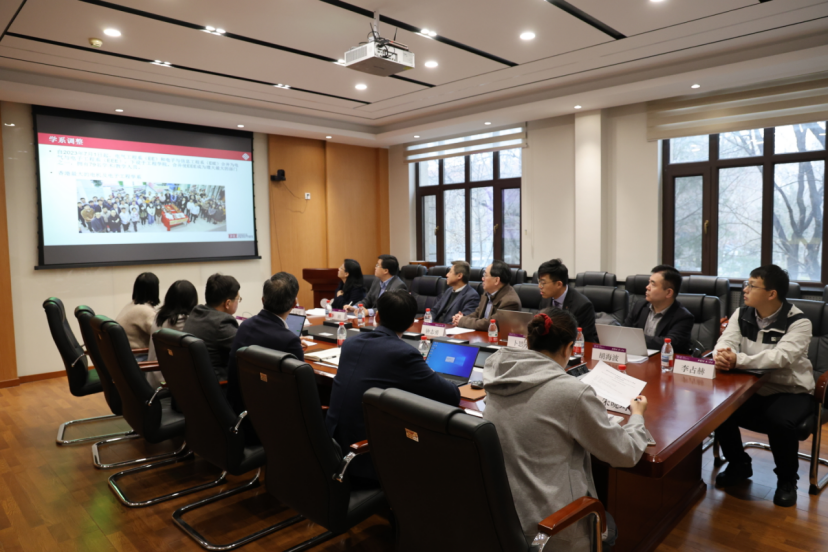
The Meeting Venue
Kang Chongqing extended a warm welcome to Professor Zhong Zhiyong and his delegation. He pointed out that the EEE Department of PolyU and EEA of Tsinghua University share similar professional fields and have already carried out fruitful cooperation in academic exchanges, scientific research and international organizational activities in the early stage. He hoped that this visit and exchange would further promote all-round and multi-level cooperation between the two sides. Professor Zhong Zhiyong expressed sincere gratitude to the faculty and students of EEA for their long-term active cooperation and exchanges with PolyU, especially for the strong support given to the first IEEE Power & Energy Society (PES) International Meeting hosted by PolyU last January.
Professor Bu Siqi, Deputy Head of the EEE Department of PolyU, introduced the basic overview of PolyU and its EEE Department. The EEE Department boasts a strong faculty and a vibrant research atmosphere, covering six key research areas: power and energy systems, electric vehicles and smart transportation, photonics and intelligent devices, artificial intelligence, robotics and materials engineering, communications and information security, and microelectronics and quantum technology. It is striving to build a world-class discipline and cultivate a new generation of engineering talents capable of addressing complex innovative challenges in the future. Sun Kai gave a detailed account of EEA in terms of its historical evolution, organizational structure, faculty team, talent cultivation and international cooperation. Chen Laijun, another Deputy Dean of EEA, introduced the department’s disciplinary development and scientific research work, including research directions, research teams, major achievements and industry-university cooperation.
During the exchange and discussion session, the participants held heated and in-depth discussions on a series of topics such as postgraduate education cooperation, undergraduate college-based education, industry-university-research cooperation models, technology transfer, academic journal development and laboratory construction. To further promote collaborative education between colleges and academic departments, Ye Liguma, Assistant Dean of Weiyang College, introduced the college’s general situation and highlighted the important changes in its education model in 2025, which better aligns major national strategic needs with students’ development needs. Zhu Xiaoqi, General Services Manager of Ziqiang College, gave a comprehensive introduction to the college, including its positioning, faculty development, talent cultivation program and core curriculum development, emphasizing that Ziqiang College is committed to nurturing innovative leading talents in the field of smart energy. The participants conducted discussions on hot topics such as the innovation of student cultivation models, the optimization of enrollment work and the supervisor-student relationship, which provided more ideas for future cooperation and exchanges.
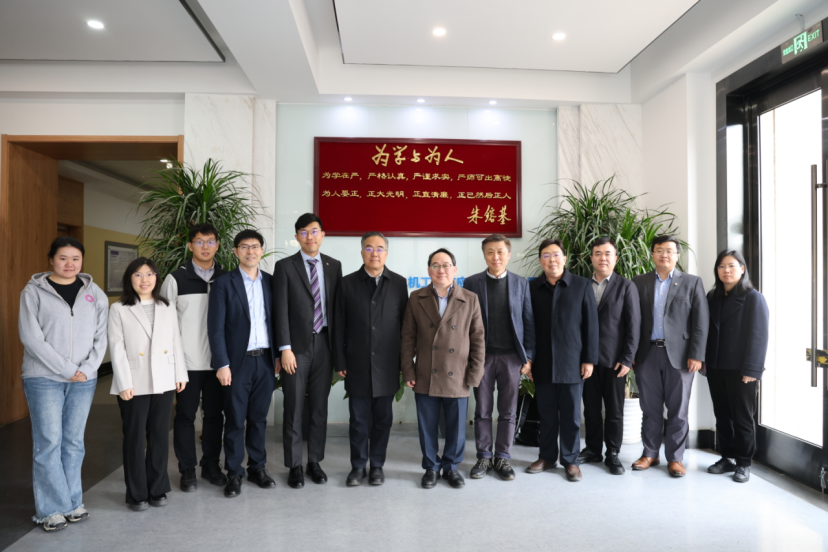
Group Photo of the Participants